
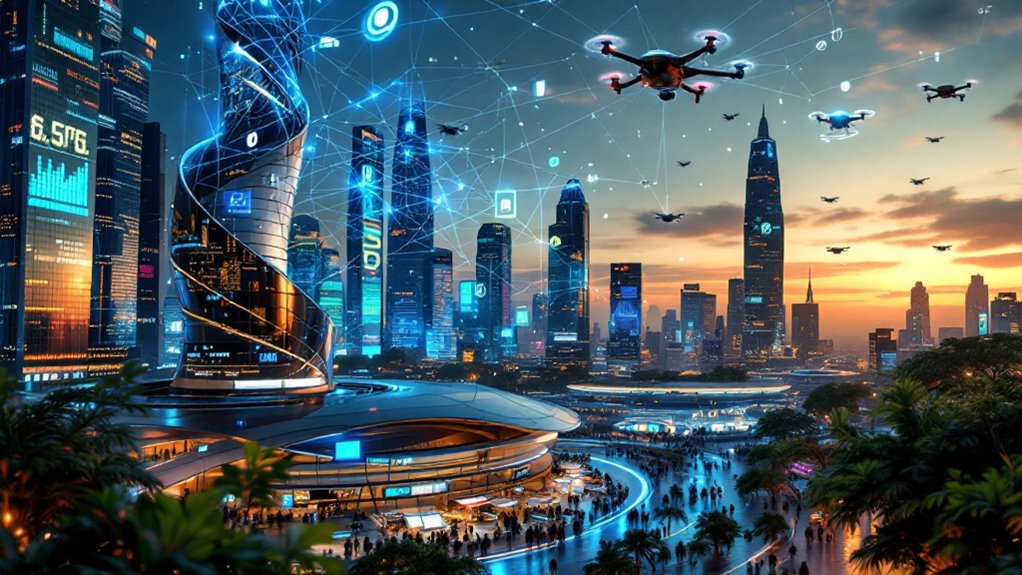
The metaverse is a digital universe that fuses virtual and augmented reality with the internet, allowing users to engage and transact in immersive environments. Cryptocurrencies empower this ecosystem by enabling decentralized ownership of virtual assets and facilitating secure transactions through blockchain technology. Additionally, they create economic dynamics that drive user interaction and investment. With the rise of integrated financial systems, the future of crypto-powered metaverse ecosystems holds exciting possibilities for users and creators alike.
As the metaverse continues to evolve, cryptocurrencies emerge as an essential component, enabling decentralized ownership of virtual assets. The underlying blockchain technology facilitates secure and transparent transactions, allowing users to own digital items and virtual land without the need for centralized control. This decentralization fosters user autonomy, as ownership can be transferred and traded freely among users, further enhancing the value of these assets in a market-driven environment dependent on demand and user engagement.
In the metaverse, the value of virtual assets, such as items and real estate, is intrinsically tied to user interaction and economic dynamics. Cryptocurrencies provide the means for creators and investors to monetize their contributions within these immersive worlds. By shifting control from platform operators to individual users, cryptocurrencies lay the groundwork for a more open and equitable virtual economy. This shift not only empowers users but also encourages participation, leading to richer, more diverse metaverse experiences. The interconnectedness of digital spaces is vital in ensuring that users can traverse different platforms while retaining their virtual assets.
The security and transparency of blockchain technology are fundamental in verifying the authenticity and scarcity of virtual assets. With a tamper-proof ledger, users can trust the provenance of their digital property, while smart contracts automate and enforce agreements in transactions, reducing the risk of fraud and counterfeiting. This immutable record enhances trust among users, as they can easily verify ownership and transaction histories, essential for a sustainable and reliable virtual economy. Moreover, blockchain technology’s public ledger ensures that all transactions are recorded transparently, further instilling confidence in users. Additionally, stablecoins can serve as a reliable medium of exchange within metaverse transactions, providing a stable value amidst fluctuating digital currencies.
Moreover, the integration of non-fungible tokens (NFTs) and crypto wallets plays a pivotal role in establishing identity and facilitating transactions in the metaverse. NFTs represent unique digital assets, allowing users to trade and collect items seamlessly. Crypto wallets store various digital goods, including avatars and virtual accessories, while serving as identity tools that enable seamless interactions without traditional Know Your Customer (KYC) processes. This interoperability across platforms enhances asset liquidity, supporting innovative business models and revenue streams for digital creations.
The growing reliance on cryptocurrencies in metaverse economies is evident as platforms utilize them for transactions involving virtual goods and services. As cryptocurrencies become the backbone of these economies, users can engage in play-to-earn models, generating income through gaming and virtual activities. Investment in these virtual economies is surging, attracting developers and financiers alike. Virtual economies are driven by the buying, selling, and trading of virtual assets, significantly influenced by cryptocurrencies.
Technological advances in blockchain scalability and clearer regulatory frameworks are further fueling the growth of crypto-powered metaverse ecosystems. With increasing mass adoption of both metaverse platforms and cryptocurrencies, demand for integrated financial systems continues to rise, heralding a new era of digital interaction and commerce.
Frequently Asked Questions
Can I Create My Own Virtual World in the Metaverse?
Yes, individuals can create their own virtual worlds in the metaverse. Various platforms provide tools and frameworks catering to different skill levels, from no-code solutions like VIVERSE to more complex environments using Unity or Unreal Engine.
Open-source options, such as Ethereal Engine, offer customizable features for unique experiences. With blockchain integration, creators can also incorporate ownership and trade of digital assets, enhancing the richness and functionality of their virtual worlds.
What Are the Risks of Investing in Metaverse-Related Cryptocurrencies?
Investing in metaverse-related cryptocurrencies presents several risks, including regulatory gaps that expose consumers to potential fraud and asset loss.
The decentralized finance (DeFi) protocols underpinning these investments lack adequate oversight, increasing vulnerability to hacks and failures.
Additionally, the market’s speculative nature contributes to significant volatility and potential capital loss.
Moreover, the anonymity of crypto transactions can facilitate scams and financial crimes, making due diligence essential for prospective investors.
How Do Virtual Reality and Augmented Reality Fit Into the Metaverse?
Virtual reality (VR) and augmented reality (AR) play vital roles in the metaverse by creating immersive experiences.
VR establishes fully realized digital environments, enhancing user engagement through realistic simulations. In contrast, AR overlays digital elements onto the physical world, facilitating interaction between virtual and real-life contexts.
Together, these technologies foster social connections, collaborative work, and innovative applications across various industries, ultimately driving user participation and transforming how individuals engage with both the digital and physical domains.
Are There Any Regulations Governing Activities in the Metaverse?
Regulations governing activities in the metaverse are currently fragmented and inconsistent across jurisdictions.
Traditional legal frameworks struggle to address unique challenges posed by virtual environments, including property rights, data privacy, and cybersecurity.
While some existing laws, like GDPR and CCPA, offer partial coverage, significant regulatory gaps remain.
There is an increasing call for harmonized international regulations to guarantee legal clarity, consumer protection, and support for technological innovation within these expansive digital spaces.
How Can I Buy Virtual Real Estate in the Metaverse?
To buy virtual real estate in the metaverse, one must first create a crypto wallet to store digital assets.
Next, users purchase platform-specific cryptocurrencies, such as SAND or MANA, from exchanges.
They can then browse marketplaces for available parcels or properties, select their desired land, and complete the purchase through a blockchain transaction.
Ownership is recorded as an NFT, enabling users to buy, sell, or lease their virtual property securely.