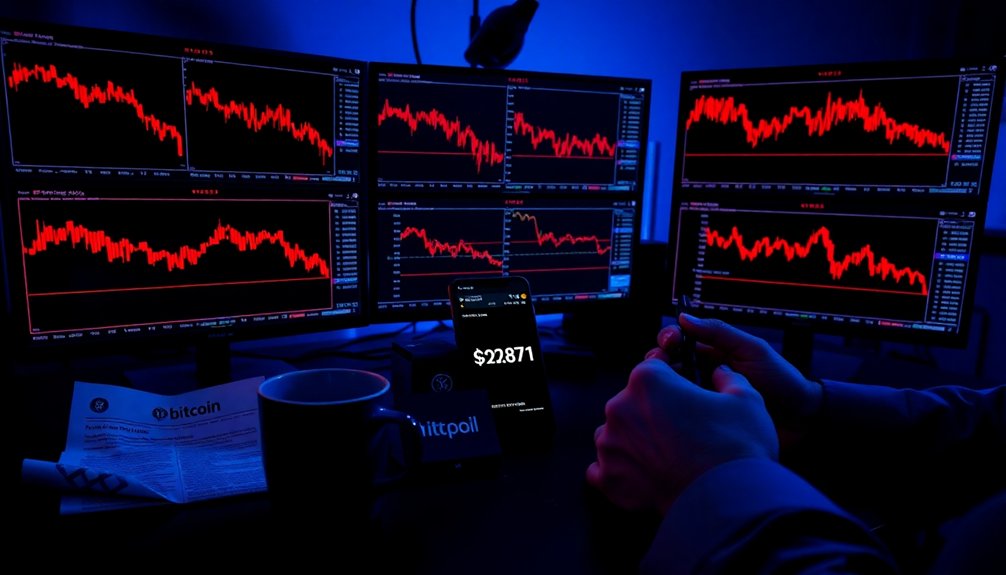
While crypto investors scrambled for safety amid October’s brutal market crash, the digital asset ecosystem is showing early signs of resilience. Bitcoin dropped below $107,000 and Ethereum fell under $4,000, wiping out over $400 billion in market value. Ouch. A single day saw $19 billion in liquidations as geopolitical tensions flared, particularly the US-China trade conflict.
Bitcoin’s holding up better than the altcoins. No surprise there. The smaller coins got absolutely hammered. Short-term Ethereum holders are taking losses left and right. But here’s the thing – that pain might actually signal an upcoming rebound. It’s happened before. The crypto market loves its dramatic swings.
Bitcoin weathers the storm while altcoins flounder. Short-term pain often signals crypto’s next explosive upswing.
Institutional investors aren’t panicking. They’re staying put, even adding to positions in some cases. These big players see Bitcoin as a long-term value store, not a get-rich-quick scheme. Their conviction might explain why analysts are still projecting Bitcoin to hit $150,000-$180,000 and Ethereum $8,000-$12,000 by early 2026. Bitcoin’s limited supply cap makes it an attractive inflation hedge compared to many altcoins.
Regulation is finally making sense. The GENIUS ACT in the US brought clarity to stablecoins. Europe’s MiCA rules enabled euro stablecoins like EURC, which is absolutely crushing it with adoption rates. Better rules, less chaos. Fancy that.
Speaking of stablecoins – they’re booming. The market grew over 15% in Q3 2025, reaching above $230 billion in supply. Monthly transactions now exceed $4 trillion. Tether and USDC still rule the roost, but newcomers like EURC and PYUSD are growing at ridiculous rates. Bitcoin hit a new all-time high of $126,199 in early October before the market turned south.
Recovery hinges on Bitcoin holding support above $100,000. If that happens, we might see short-term rebounds. The market’s seen this movie before: crash, panic, recovery, new highs. Venture capital’s getting pickier too, funding solid projects rather than hype machines.
Expect more volatility. Banking stress, leveraged positions, and macroeconomic uncertainties remain. But the infrastructure looks stronger this time around. As investors shift focus toward gold and silver as safe-haven assets, the crypto market’s resilience will be truly tested. Maybe – just maybe – this dip isn’t so different after all.