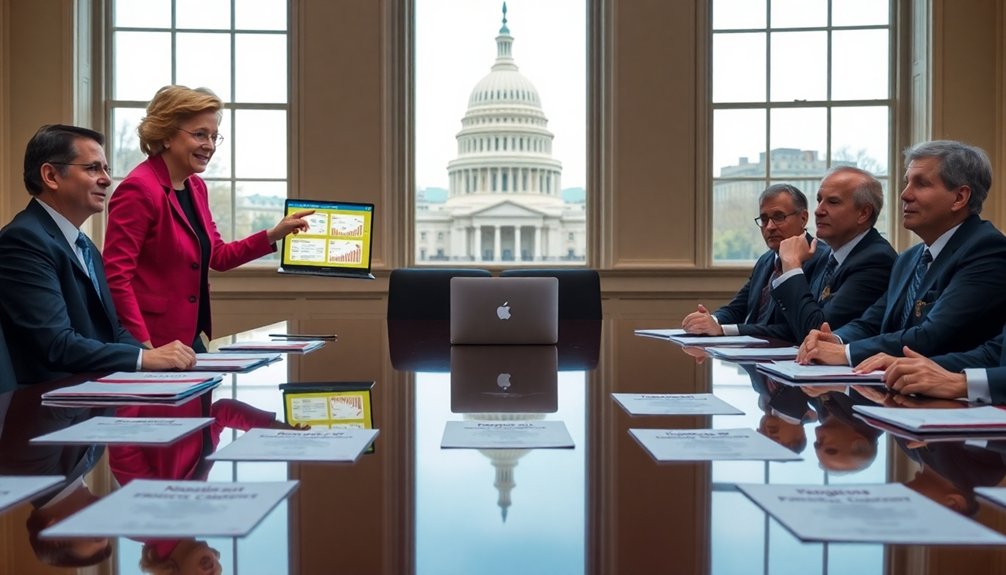

While crypto lawyers have spent years charting the SEC’s murky enforcement waters, a dramatic shift is finally underway. The SEC’s Spring 2025 Rulemaking Agenda has done a complete 180, prioritizing clear rules for crypto instead of endless enforcement actions. About time.
SEC Chair Paul Atkins isn’t messing around with his “Project Crypto” initiative. The goal? Modernize outdated securities rules for digital assets and make the U.S. a global crypto leader again. No small feat after years of regulatory whack-a-mole that sent businesses fleeing overseas.
The real game-changer came on September 2nd. The SEC and CFTC actually agreed on something—shocking, I know—issuing a joint statement that registered exchanges can list spot crypto products. This includes those with leverage and margin. Lawyers who’ve been fighting uphill battles now have actual regulatory clarity to cite in court.
Commissioner Hester Peirce’s Crypto Task Force has been busy too, holding roundtables with industry players since January. They’re actually listening to stakeholders. What a concept.
Enforcement priorities have narrowed considerably. Remember that Coinbase civil action? Dismissed. And crypto firms won’t need to register as alternative trading systems anymore. The $4.5 billion Terraform judgment penalty stands as a stark reminder of the previous administration’s enforcement-heavy approach. The regulatory burden just got lighter.
Even crypto ETPs caught a break when the SEC allowed in-kind creations and redemptions in July. This puts crypto ETPs on par with traditional ETF structures, cutting out operational friction and tax inefficiencies that were driving investors crazy.
For crypto lawyers, this policy shift isn’t just good news—it’s ammunition. The introduction of potential exemptions from Securities Act registration for crypto companies provides a concrete legal pathway that was previously unavailable. After years of defending clients with vague “fair notice” arguments, they now have concrete regulatory guidance to cite. Court cases that once seemed hopeless suddenly have viable defense strategies.
The regulatory clouds haven’t completely cleared. But for the first time in years, crypto lawyers have something resembling a roadmap instead of just a regulatory minefield.