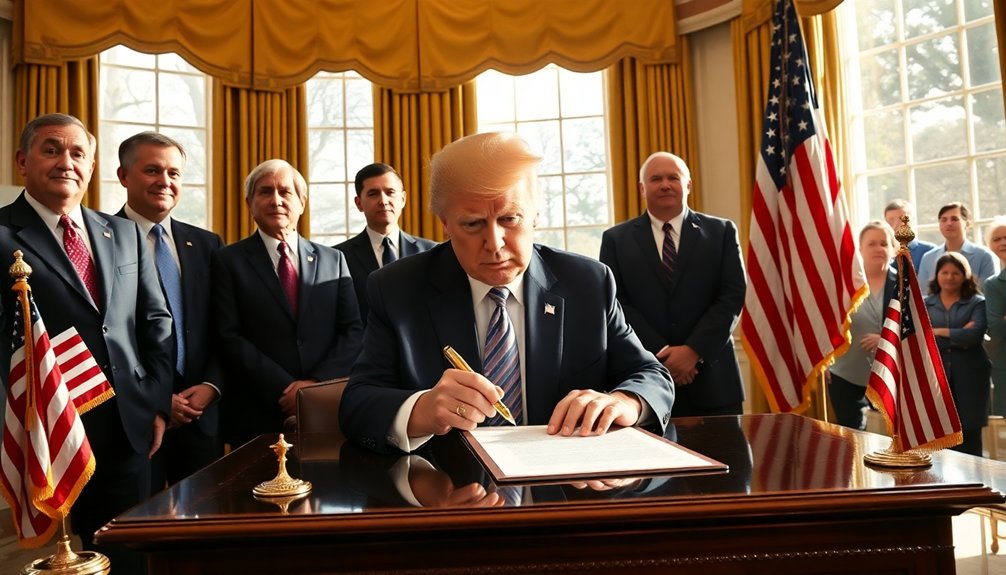

After 43 excruciating days of partisan bickering and financial strain on federal workers, President Trump finally put pen to paper on November 12, 2025, signing legislation that ends the longest government shutdown in U.S. history. The bill extends funding for most agencies until January 30, 2026, and includes three full-year funding packages for specific government sectors. Not a moment too soon.
After 43 days of political warfare, Trump ends the shutdown with a stroke of his pen. Too little, too late.
The shutdown began as a standoff over border security funding. Republicans and Democrats? Miles apart. While essential services like air traffic control limped along, hundreds of thousands of federal employees either sat at home or worked without paychecks. Talk about dedication.
The Senate approved the package after weeks of heated negotiations. Eight Democrats broke ranks to support the deal, proving that even in Washington, survival instincts occasionally kick in. The House quickly followed suit, passing the Senate’s version before it landed on Trump’s desk.
Throughout the 43-day ordeal, the blame game was in full swing. Republicans pointed fingers at Democrats for coddling the far left. Democrats fired back, accusing Republicans of refusing to negotiate on key issues like Affordable Care Act tax credits. Trump characterized the situation as the “Democrat Shutdown” in multiple statements. Both sides used the shutdown to fire up their bases. Shocking, right?
The economic toll? A staggering $11 billion. National parks closed. Passport processing halted. Small businesses depending on government contracts watched their bank accounts dwindle. Public trust in government? Already on life support, now barely has a pulse.
The bill includes back pay for furloughed workers, a small consolation for the financial chaos many endured. The shutdown left approximately 670,000 federal employees furloughed throughout its duration. Federal contractors weren’t as lucky. New Democratic representative Adelita Grijalva was sworn in during the shutdown’s final days, getting a crash course in Washington dysfunction.
While the immediate crisis is over, the underlying partisan divisions remain untouched. The funding bill is basically a band-aid on a bullet wound. Sure, the government’s open again. But with both sides already positioning for the next fight, the reprieve feels temporary at best.