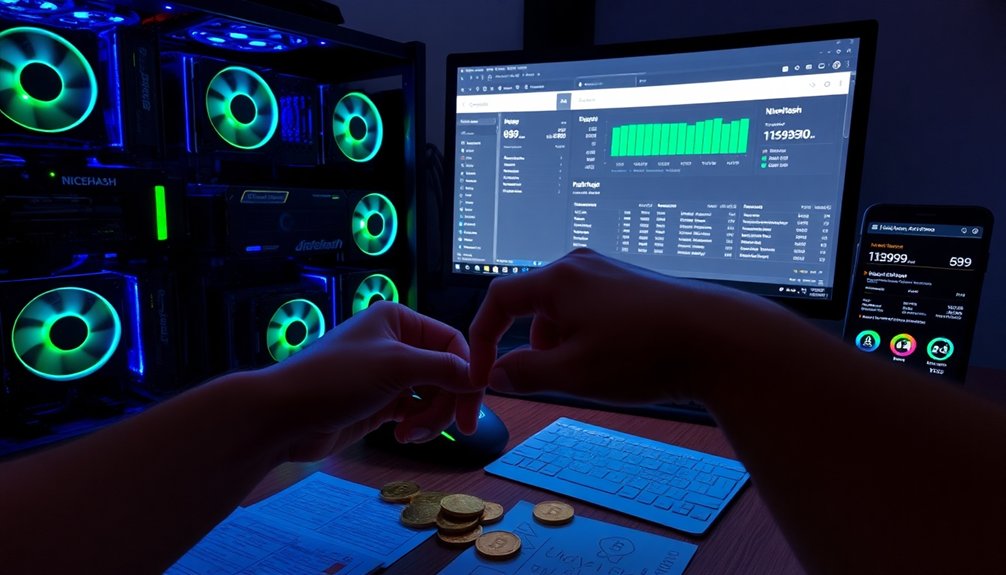

Why does NiceHash continue to divide the crypto mining community in 2025? Simple answer: it’s complicated. The platform offers convenience that beginners love—instant Bitcoin payments for your hashpower without the headache of managing multiple wallets.
But that same centralization makes security experts nervous. And they have reasons.
Let’s not forget 2017. The NiceHash hack wasn’t just a bad day—it was catastrophic. While they’ve implemented security improvements since then, the centralized structure remains a juicy target for attackers.
The 2017 breach revealed the fundamental vulnerability of centralized mining platforms—convenience always comes with a security price tag.
Their hot/cold wallet practices sound reassuring, but without recent thorough audits, we’re basically taking their word for it. Not ideal.
The antivirus flags don’t help either. Sure, mining software triggers false positives. But when your mining app gets quarantined for the fifth time, it gets old fast.
Regulatory compliance? It’s a patchwork. NiceHash operates globally but lacks extensive regulatory approval. They implement KYC/AML procedures, yet cross-border Bitcoin payments exist in a perpetual gray zone. Tomorrow’s regulations could change everything.
Profitability is equally ambiguous. The marketplace model provides liquidity and immediate payouts—nice!—but those fees eat into margins. The platform’s live profitability forecasts give miners strategic advantages when planning their operations. Some miners swear by it; others claim they’re getting shortchanged.
Both could be right, depending on electricity costs, hardware, and market timing. The platform’s impressive processing of over 3.3 million orders demonstrates its scale, though volume doesn’t guarantee individual profitability.
User reviews tell the story best. “Easy setup, consistent payments,” says one miner. “Locked my account for weeks with no support,” counters another. Both experiences are authentic.
The platform’s reputation in 2025 reflects this duality. It remains the go-to for beginners seeking simplicity, while experienced miners acknowledge the tradeoffs.
Lightning Network hiccups and maintenance outages haven’t helped perception issues.
Compared to other mining services, NiceHash does charge higher transaction fees than many altcoin-based platforms, reflecting Bitcoin’s general fee structure.
NiceHash in 2025 is neither angel nor demon. It’s a practical solution with practical problems. Convenient? Yes. Risk-free? Not by a long shot.