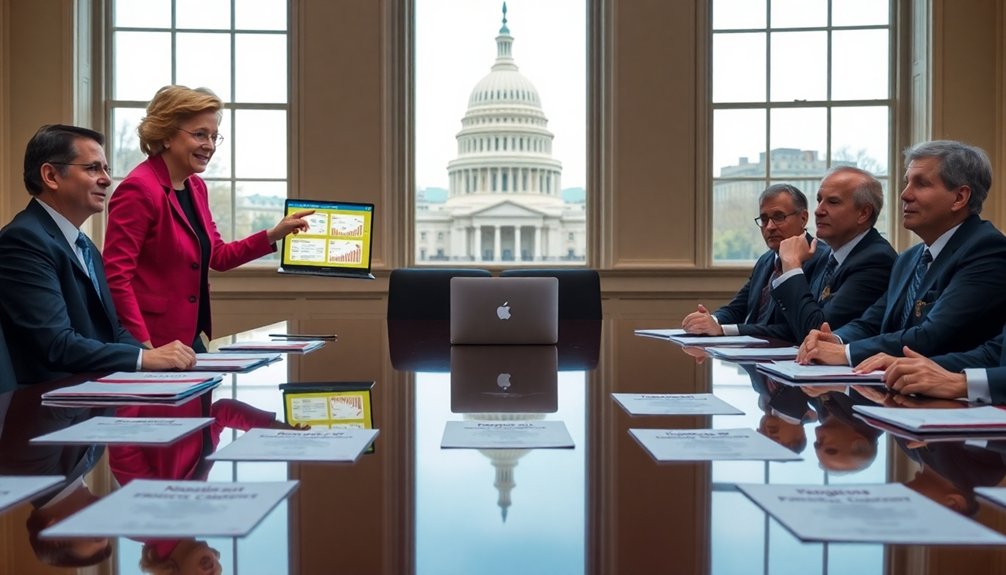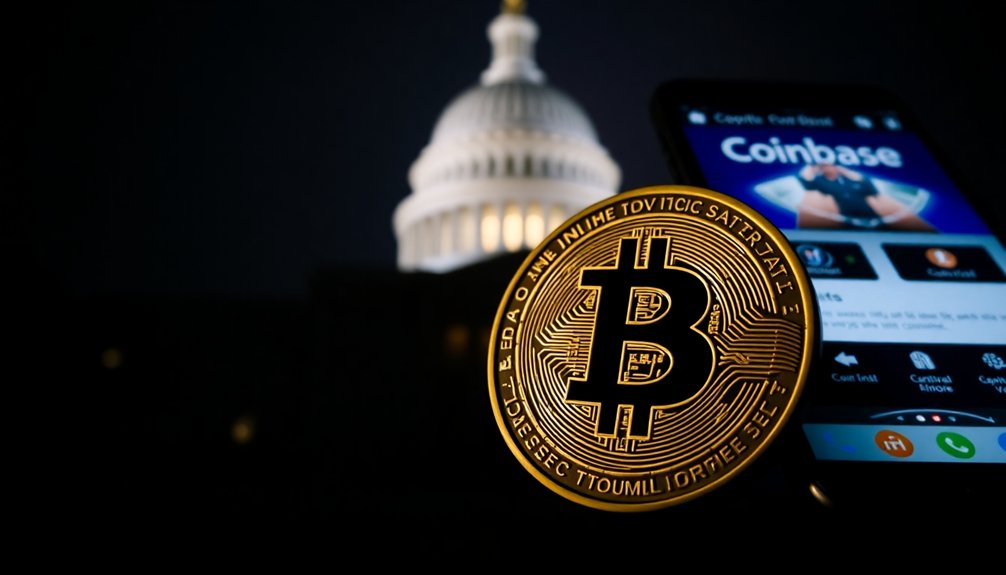

As Coinbase threatens to withdraw support for a key crypto bill over stablecoin rewards restrictions, the crypto exchange has put lawmakers on notice. The company is reconsidering its backing of the CLARITY Act, a digital-asset market-structure proposal set to be revealed Monday before heading to Senate markup this week.
Talk about timing.
The sticking point? Proposed limits on stablecoin rewards. Coinbase argues these platform-based incentives are legitimate features of the crypto market, not bank deposit equivalents. Banking groups, naturally, want tighter rules to prevent deposits flowing away from traditional banks.
Classic turf war.
The struggle between crypto innovation and traditional banking’s protective instincts continues to shape regulatory boundaries.
Final bill text could materially restrict how rewards are offered on stablecoins, potentially requiring issuers to obtain an OCC bank charter before offering yield. Coinbase has actually applied for such a charter amid these discussions.
They’re not messing around.
Galaxy Digital CEO Mike Novogratz has jumped into the fray, arguing that rolling back stablecoin yields would weaken U.S. innovation. He’s not wrong. The dispute centers on whether these rewards should be treated differently from banking products. While major cryptocurrencies show different transaction fee structures, altcoins typically offer more cost-effective options for everyday use.
Crypto executives and policy advocates have been in talks with the Senate Banking Committee, trying to make their case.
The market’s already feeling the tension. COIN stock traded flat in after-hours following a 1.96% Friday dip. Retail sentiment around Coinbase has fallen to neutral from bullish.
Not great, not terrible.
Bipartisan backing for the bill has weakened, with passage odds now below 70% in early 2026. This whole debacle threatens to derail broader crypto legislation support.
The restrictions could seriously limit crypto competitiveness versus traditional finance. For Coinbase, it’s about preserving platform incentives amid increasing regulatory pressure. These stablecoin rewards provide a stable income stream for the company, particularly when trading activity slows. For banks, it’s about preventing yield-bearing stablecoins from diverting their deposits.
With Coinbase projecting USDC rewards revenue to reach $1.3 billion by 2025, the stakes couldn’t be higher for the exchange.
Bottom line: as the bill heads to committee markup, Coinbase is making it crystal clear – mess with our rewards programs, lose our support.
Ball’s in the Senate’s court now.