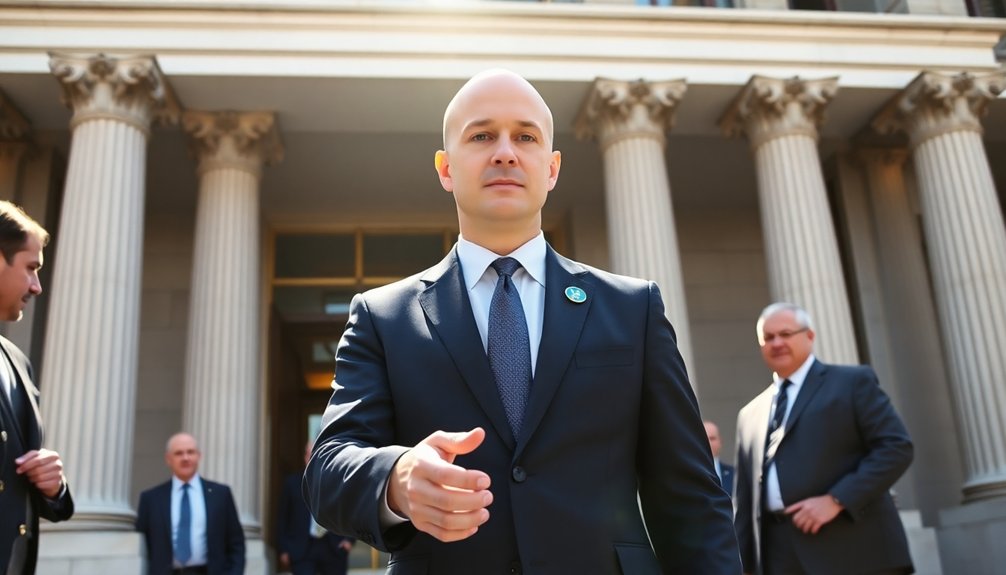

Coinbase CEO Brian Armstrong huddled with banking executives at the World Economic Forum in Davos this week, seeking common ground on the stalled U.S. crypto market structure bill. The high-profile meetings come after Coinbase dramatically pulled support for the Senate’s version just hours before a scheduled markup hearing. Talk about timing.
The main sticking point? Stablecoins. Specifically, whether crypto platforms can pay yield on stablecoin holdings. Banks hate this idea. They’re worried customers might actually prefer earning something on their money instead of letting banks profit from their deposits. Imagine that.
Armstrong wants a “level playing field” for stablecoins that could benefit both sectors. It’s not just principle – Coinbase’s revenue partly depends on those stablecoin rewards. The Senate draft would prohibit these offerings entirely, which didn’t sit well with Armstrong, who bluntly stated he’d “rather have no bill than a bad bill.”
The battle isn’t academic—Armstrong needs those stablecoin yields, and he’s ready to walk away empty-handed rather than compromise.
The Senate Banking Committee postponed their hearing after Coinbase’s withdrawal, with no new date announced. Now they’re back to the drawing board. This pause follows Coinbase’s expression of four major concerns regarding the Senate’s rewritten CLARITY Act.
Armstrong plans to relay his Davos discussions to both Senate negotiators and the Trump administration. The White House reportedly asked Coinbase to work directly with banks on the yield issue. They’ve been surprisingly constructive about crypto regulation lately.
Beyond stablecoins, Armstrong’s Davos agenda included promoting economic freedom, advancing market structure legislation, and pushing tokenization to expand capital markets access globally. These efforts align with his mission to create financial solutions for the 4 billion adults worldwide who lack access to brokerage services. Bitcoin hit $126,000 in October 2025 but has slid since November – not that this factored into the discussions, obviously.
Banks aren’t completely anti-crypto these days. Many are interested in digital asset custody, tokenization, and blockchain payments. They just want regulation that doesn’t threaten their century-old business model. Altcoins like Ethereum offer lower transaction fees compared to Bitcoin, making them potentially more attractive for everyday banking applications.
The clock is ticking on U.S. crypto legislation. Lawmakers warn America risks falling behind international competitors if they don’t move faster. But with stablecoin yields remaining a major roadblock, don’t hold your breath for quick progress.