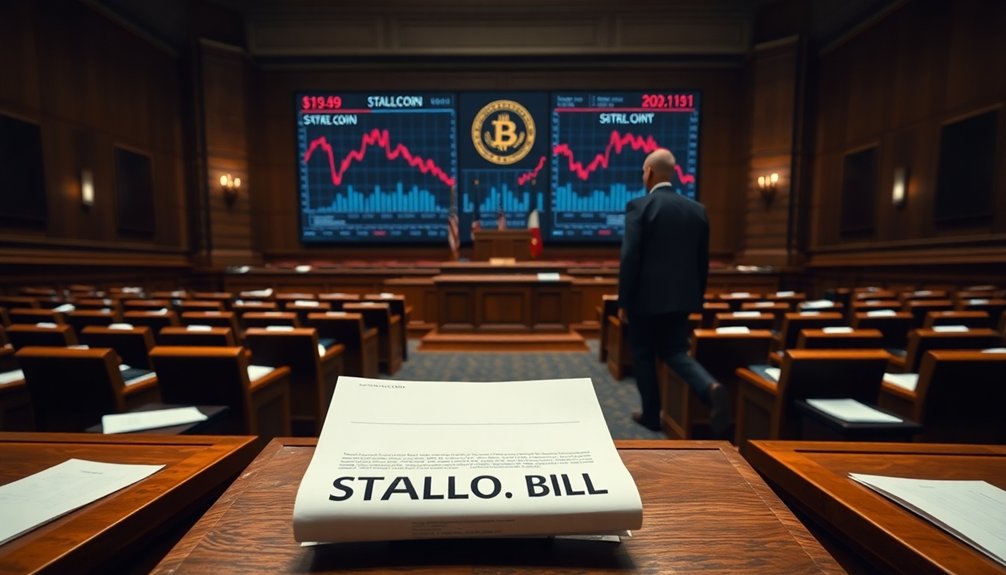

As the initial euphoria from Donald Trump’s election victory fades, the cryptocurrency market has taken a significant downturn, according to Federal Reserve Governor Christopher Waller. Speaking at a Global Interdependence Center conference in La Jolla, California, Waller noted that Bitcoin has dropped from its late 2025 highs to the $60,000-$70,000 range in early February 2026. Not exactly pocket change.
The decline mirrors a broader selloff affecting crypto-related stocks. Strategy Inc tumbled 13.4%, while Coinbase Global Inc plunged 31% over the past month. Marathon Digital Holdings Inc wasn’t spared either, falling 20.8%. Mainstream financial firms are apparently adjusting their risk positions. Shocker.
Crypto stocks taking a beating as markets realize Trump’s election didn’t magically solve regulatory headaches. Who could’ve seen that coming?
Waller shrugged off the volatility as business as usual in crypto land. Bitcoin and other digital assets remain separate from traditional finance, he emphasized. Prices go up, prices go down. Don’t like it? Stay away. Remember when Bitcoin at $10,000 seemed insane? That’s now considered the good old days.
The post-Trump election optimism that initially lifted markets is losing steam in the crypto world. The main culprit? A frustrating lack of regulatory progress. Investors wanted clarity, but they got the usual Washington foot-dragging instead.
The industry desperately needs clearer definitions for digital assets – are they securities or commodities? That’s for Congress, the SEC, and CFTC to figure out. But with the Clarity Act stalled in Congress, enthusiasm has dampened considerably. Setting clear investment goals becomes even more crucial during such regulatory uncertainty to guide decision-making and establish acceptable loss thresholds.
Despite the drama, crypto is increasingly intersecting with traditional finance. Institutions are exploring blockchain infrastructure, while the U.S. Treasury contemplates tokenized securities. Waller has been working to find middle ground solutions between conflicting interests of traditional banks and crypto firms regarding proposed regulations. Exposure via hedge funds, trading desks, and ETFs means crypto is no longer just for basement-dwelling tech nerds.
Blockchain technology continues forcing improvements in traditional systems, particularly payments. Unlike legacy platforms, crypto rails operate 24/7 globally, enabling faster and cheaper transfers. Banks are feeling the pressure to keep up. These price swings represent what Waller describes as typical market “winters” rather than extraordinary events threatening the financial system.
Meanwhile, the Fed’s proposal for “skinny accounts” – limited payment accounts without interest or discount window access – has crypto firms wanting more while banks worry about money laundering risks. Finding middle ground seems about as easy as predicting Bitcoin’s next move.