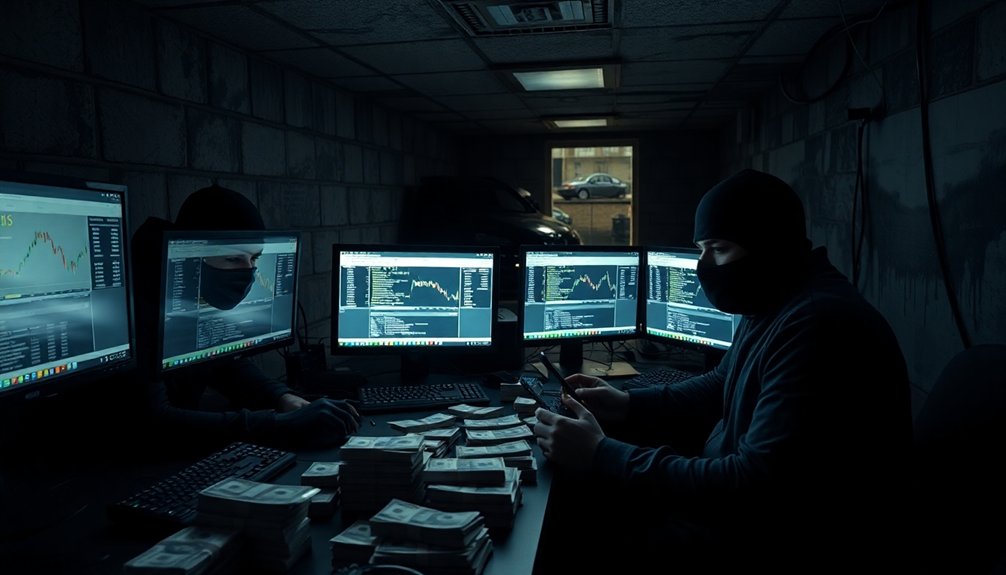
Billions of dirty narco dollars are flowing through crypto networks as Mexican cartels embrace digital currencies for their money laundering operations. U.S. authorities have seized $2.5 billion in crypto from 2020-2024, surpassing the $2.2 billion in cash they grabbed. But that’s just scratching the surface. The DEA isn’t mincing words — crypto is now the cartels’ go-to laundering tool.
The numbers are staggering. Illicit crypto addresses received a whopping $154 billion in 2025 alone, up 162% from the previous year. TRM puts the figure even higher at $158 billion. That’s not pocket change. It’s the highest in five years, and 2024’s estimate got bumped from $40.9 billion to $57.2 billion.
Seems like they keep finding more dirt under the rug. Chinese money laundering networks are running the show now. They’re basically offering “laundering-as-a-service” — how convenient! — for everyone from fraudsters to hackers to cartels. Implementing robust internal controls across cryptocurrency platforms could significantly disrupt these organized laundering operations. In October 2023, authorities indicted 24 couriers working for a Chinese organization that was in bed with the Sinaloa Cartel. Money’s moving, folks.
The cartels aren’t exactly hiding, either. Mario Alberto Jiminez Castro got slapped with sanctions for laundering crypto for Los Chapitos faction. Sergio Antonio Duarte Frias moved $869,000 via crypto before getting nabbed. Their methods? Convert bulk cash to bitcoin, layer it through multiple wallets, rinse and repeat. The growing connection between crypto and violent crime is evident as these cartel operations represent a physical coercion threat coinciding with cryptocurrency market fluctuations.
Law enforcement is playing catch-up. While they’re celebrating the first OFAC designation of a cartel crypto wallet in September 2023, the criminals are already ten steps ahead. Cops are still analyzing patterns while cartels and Chinese networks adapt on the fly.
Crypto makes transfers quick and anonymous — no nosy bank tellers asking questions. The worst part? The infrastructure overlaps with sanctioned entities like Iran’s proxies and Russian evasion networks. Stablecoins like USDT have become crucial for sanctions evasion, processing billions in illicit funds with minimal oversight. Everyone’s using the same digital back alleys. It’s a global problem now, and 2026 isn’t looking any brighter.