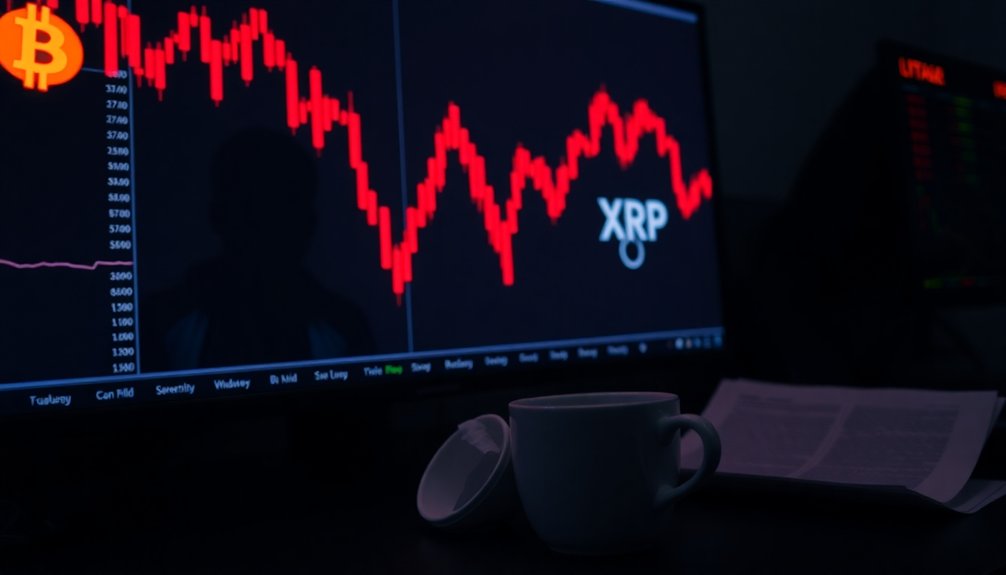
Crypto markets got hammered. Hard. A $517 million liquidation wave swept through digital assets after Trump confirmed “major combat operations” against Iran on February 27, 2026. Nothing like a military strike announcement to remind everyone how fragile crypto really is.
Operation Epic Fury — the U.S.-Israeli offensive targeting Iranian missile infrastructure, naval assets, and nuclear facilities — hit five cities: Isfahan, Qom, Karaj, Kermanshah, and Tehran. Iran fired back with missiles toward Israel. Markets noticed immediately.
Bitcoin dropped about 2%. Not catastrophic by crypto standards, but the cascade that followed told the real story. XRP and Solana got hit harder, both already sitting in established downtrends before the bombs started falling. The geopolitical shock didn’t create their weakness — it just kicked them while they were down.
The geopolitical shock didn’t create XRP and Solana’s weakness — it just kicked them while they were down.
Meanwhile, gold jumped 1%. Classic. The NASDAQ slid nearly 1% too, so this wasn’t just a crypto panic. Broader markets felt it. But crypto felt it worse, because crypto always feels it worse when fear takes over.
The U.S.-Iran relationship has been a slow-motion disaster since the 1953 coup, running through the 1979 hostage crisis, the JCPOA collapse, years of escalating sanctions. February 2026 crossed a threshold most people hoped wouldn’t get crossed.
Investors repositioned fast, fleeing toward liquidity and safety. Crypto was the first thing they dropped.
There’s an interesting wrinkle here too. Iran is actually a significant Bitcoin producer. If the regime needs cash to buy military equipment, Iranian Bitcoin liquidation could accelerate selling pressure further.
Or holders flee with assets rather than dump them. Either way, watching Bitcoin, gold, and oil movements together becomes a real-time conflict escalation tracker. Grim, but accurate.
Liquidation patterns suggest institutional players led the exit, not just retail panic. The $517 million in forced liquidations accelerated because weak technical structures in SOL and XRP couldn’t absorb the shock. Traders who had employed tiered stop-loss orders likely avoided the worst of the damage, as those predefined exit points triggered automatically before losses compounded during the chaos.
When markets are already fragile and geopolitical chaos erupts, the math gets ugly fast. Twenty-four hours. That’s all it took.