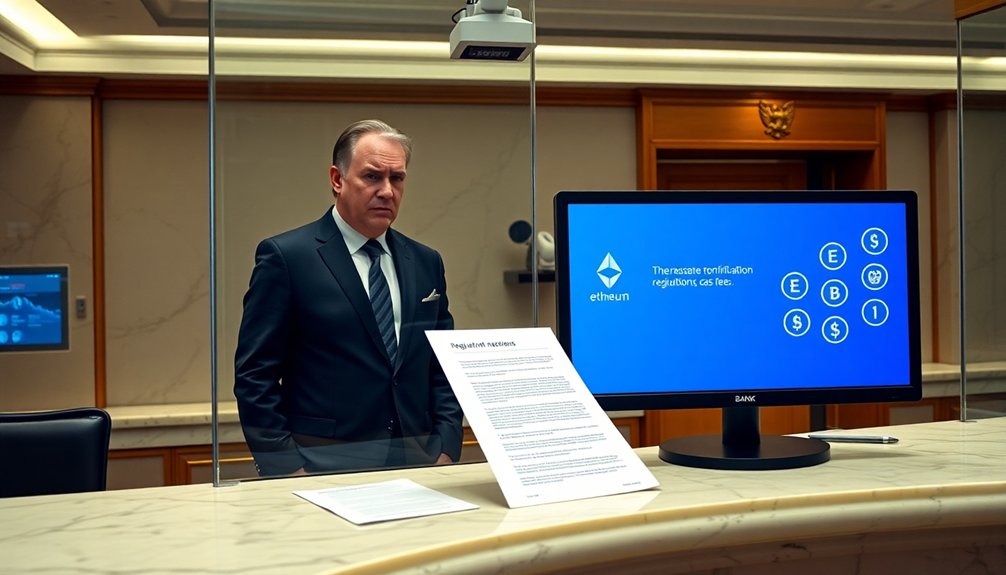

Crypto wallets can now touch derivatives markets directly — and the regulators actually made it happen. After years of bureaucratic friction, the CFTC and SEC have quietly dismantled several barriers that kept crypto wallets locked out of mainstream derivatives markets. This is a big deal.
The CFTC pulled back Staff Advisory 20-34, which had stopped futures commission merchants from accepting digital assets as customer collateral. Gone. In its place, new no-action relief lets FCMs accept non-securities digital assets — including payment stablecoins — as margin collateral. A pilot program launched December 8, 2025, specifically permits bitcoin, ether, and USDC as customer margin. FCMs just need to file notice via WinJammer and submit weekly reports for three months. Bureaucracy lite.
The CFTC scrapped Staff Advisory 20-34. Bitcoin, ether, and USDC are now valid margin collateral.
Meanwhile, the SEC handed DTCC no-action relief on December 11, 2025, covering tokenization services and 24/7 wallet transfers. That applies to Russell 1000 securities, US Treasuries, and major index ETFs for three years. So tokenized collateral can now move peer-to-peer between approved wallets around the clock. No waiting for Monday morning.
Then came the joint SEC-CFTC interpretation on March 17, 2026. Most crypto assets — including those from airdrops, staking, mining, and wrapping — are not securities. That single clarification reshapes everything. FIT21 and the CLARITY Act back this up, giving the CFTC exclusive spot market jurisdiction over digital commodities and creating formal registration paths for exchanges, brokers, and custodians.
Banks got upgrades too. US banking regulators withdrew old guidance that had restricted banks from digital asset activities. New guidance opens the door wider for banks to engage with digital assets and distributed ledger technology. The SEC also rescinded Staff Accounting Bulletin 121, removing a key accounting obstacle that had previously discouraged banks and custodians from holding digital assets on behalf of customers.
The disintermediation angle is real. Retail customers can now access clearing organizations with limited intermediation. Non-custodial wallet providers are stepping into roles that traditional brokers once monopolized. Unlike traditional hot wallets, which remain vulnerable to online threats, these non-custodial solutions increasingly incorporate cold storage security measures to protect private keys from network-based attacks. DEXs and DeFi protocols are expanding fast alongside these regulatory shifts. The GENIUS Act established a federal regulatory framework specifically for payment stablecoins, classifying them separately from securities, commodities, and deposits — a foundational move that underpins much of the collateral reform now unfolding.
Regulators spent years building walls. Now they’re handing out keys. Whether markets are ready for what comes next is a completely different question.