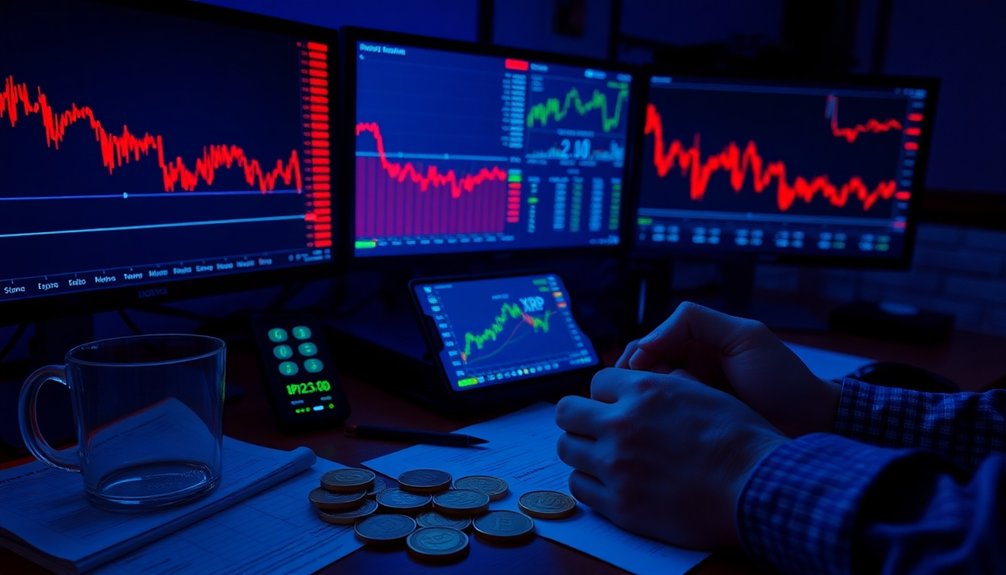

The crypto market is having a rough go of it lately. XRP, SHIB, and BTC are all bleeding out simultaneously, and the charts aren’t exactly inspiring confidence. Sellers are firmly in control. No sugarcoating it.
XRP is trading below a multi-month support level that broke in early June, and it’s creeping dangerously close to the $1 psychological mark. A breakdown below $1 could make things considerably worse, triggering larger price swings and deeper technical damage. The downtrend structure has been intact since early 2025, and buyers simply can’t sustain any meaningful push above key levels.
XRP is inching toward $1 — and if that floor gives way, the damage could get ugly fast.
The overhead resistance sits between $2.22 and $2.25 from early March rejections. That’s a long way up from here.
Then there’s SHIB. The $0.00002 level? Gone. The Shiba Inu token lost its 200 EMA support and took a substantial hit, leaving holders in a rough spot. Now the focus shifts to $0.000015 as the next psychological target, though even that level looks shaky given the current momentum.
A drop to $0.00001 or lower isn’t out of the question. CHIB breached its final support at $0.00000680, opening up a 26% downside risk toward $0.00000500. The one silver lining — barely — is that RSI divergence is hinting at slightly waning selling pressure. Emphasis on slightly.
Bitcoin isn’t doing much better. BTC has slipped below $60,000 again, proving that the May recovery was basically a head fake. The $65,000 threshold is a major concern — dropping below it has historically triggered heavy liquidations, and bears are making that scenario look increasingly likely. Traders who lack a disciplined investment approach and clear exit strategies are particularly vulnerable when market conditions deteriorate this sharply, as impulsive panic selling tends to compound losses rather than protect capital.
The death cross cancellation rumors that briefly circulated? Those have faded. BTC has dropped below its 200-day moving average, and the downward trend is intensifying. No higher highs. No trend reversal signals. Just lower lows.
What ties all three together is a market-wide sentiment fracture that’s getting harder to ignore. XRP, SHIB, and BTC share the same grim technical picture: lower highs, lower lows, declining moving averages, and overhead resistance zones that seem almost unreachable right now. Volume patterns across all three assets continue to signal distribution rather than accumulation, reinforcing the view that institutional and retail participants alike are offloading rather than building positions. Adding noise to an already uneasy environment, CZ publicly disputed the Forbes wealth rankings, claiming his net worth surpasses even Bill Gates — the kind of headline that does little to restore measured confidence in the space.
There are faint signs of exhaustion in the selling pressure — but exhaustion is not a reversal. Fear is gripping the broader market, and nothing in the current chart setups suggests a meaningful recovery is coming anytime soon. The bears aren’t just visiting. They’ve moved in.