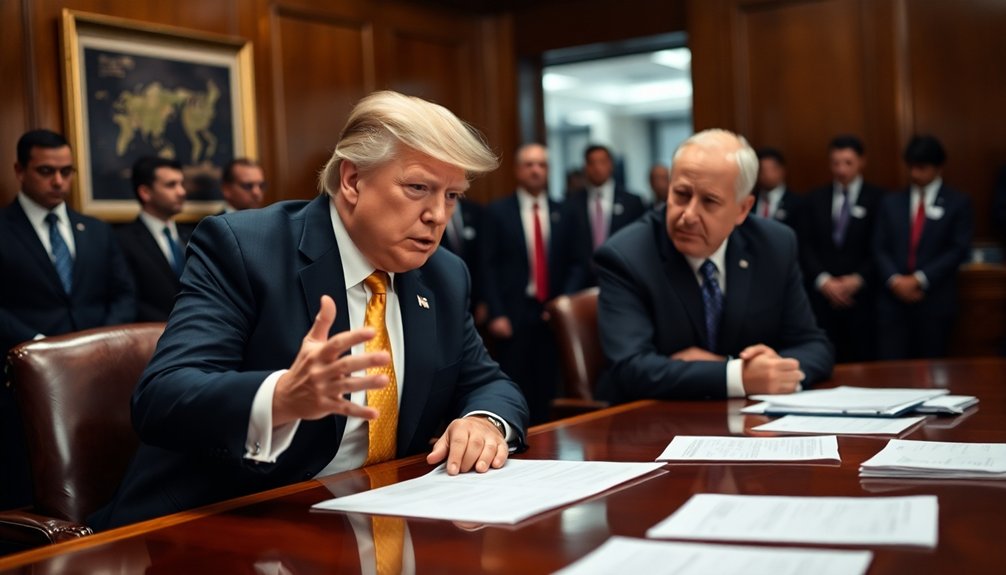
While most presidents spend their first year in office maneuvering through policy fights and press conferences, Donald Trump spent his steering something far more lucrative. Cryptocurrency ventures generated over $1.4 billion in income for him during the first year of his second presidency. That’s not a typo.
The money trail starts with World Liberty Financial, or WLFI. Days before Trump’s January 2025 inauguration, a UAE-linked entity dropped $500 million into the crypto venture. The deal handed that third party a 49% ownership stake, with $187 million flowing directly to Trump-related businesses. Sheikh Tahnoon bin Zayed Al Nahyan facilitated the transaction. Ethics experts didn’t mince words. They called it “corruption, plain and simple.” Congressional investigators agreed and demanded inquiries.
Then came the $Trump memecoin. It launched just before the inauguration and hit a market valuation exceeding $5 billion within hours. Trump’s family company, CIC Digital LLC, owned 80% of the supply and pulled in over $600 million in revenue. And wealthy investors spent over $148 million buying tokens just to secure a dinner meeting with the President. That’s one expensive meal.
By August 2025, WLFI tokens reached a $6 billion market valuation. Trump owned roughly two-thirds of the supply. Total crypto profits for the Trump family exceeded $5 billion in the year following the election. He reportedly doubled his net worth within one year of winning. Research suggests over $800 million landed in Trump and his family’s pockets during the first half of 2025 alone.
None of this happened in a regulatory vacuum. The Trump administration rolled back investor protections designed to shield customers from financial abuse. Enforcement actions and investigations into crypto companies tied to Trump’s businesses were quietly dismissed. The DOJ, SEC, and other federal agencies had their oversight capabilities gutted. Corporate cronies received pardons. Anti-corruption safeguards were stripped away. The GENIUS Act, signed in July 2025, reduced regulations further and boosted the crypto industry. Convenient timing. Senator Jeff Merkley labeled Trump’s accumulation of crypto wealth while dismantling oversight as the “Mount Everest of corruption”.
A November 2025 report by Representative Jamie Raskin concluded that crypto policies were specifically shaped to benefit Trump and his family, who were deeply entangled with foreign governments. That’s the red card moment — the point where the referee should have intervened. Nobody did. Standard safeguards such as AML and KYC verification are meant to prevent exactly this kind of financial entanglement between public officials and foreign entities, yet they were systematically dismantled rather than enforced. The full scope of Trump’s financial disclosures ran to 927 pages, released by the US Office of Government Ethics, yet accountability remained elusive.