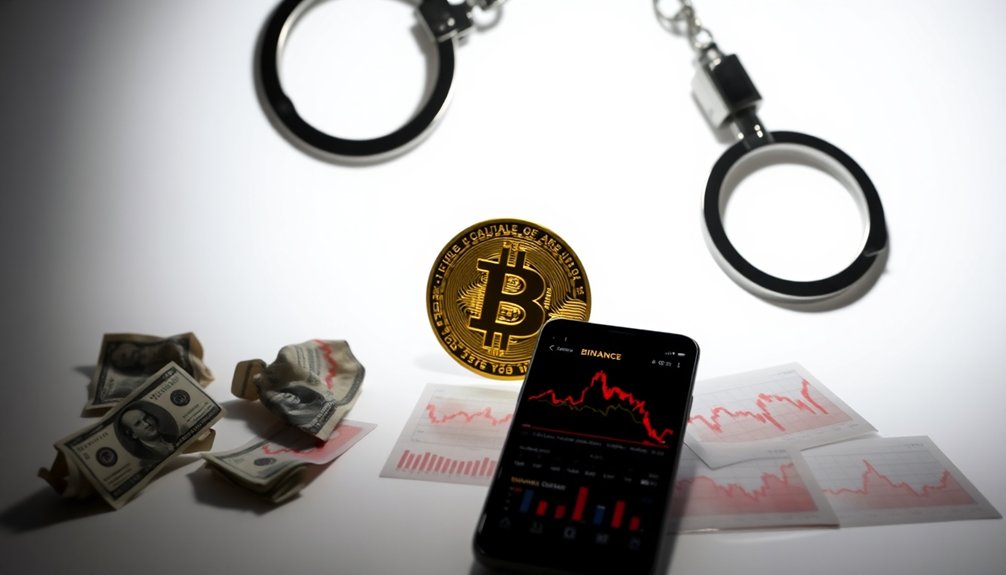

How much trouble can one cryptocurrency exchange get into? Apparently, a whole lot more. Binance, still reeling from its record-breaking $4.368 billion settlement with US authorities last November, now faces fresh allegations of compliance failures.
A Financial Times investigation has uncovered internal data showing approximately $1.7 billion in suspicious cryptocurrency transactions across 13 high-risk accounts between 2021 and 2025.
The kicker? About $144 million of these questionable transactions occurred after Binance promised to clean up its act in the November 2023 settlement. So much for turning over a new leaf.
Despite promising reform post-settlement, Binance allowed $144 million in suspicious transactions anyway. Old habits die hard in crypto.
The settlement last year was historic – the largest penalties ever issued by both FinCEN and OFAC. Binance admitted to allowing US users to trade with sanctioned entities in places like Iran, North Korea, and Syria. They agreed to stricter AML controls and a five-year monitorship.
Clearly, those controls had some gaping holes. The suspicious accounts read like a money launderer’s dream portfolio. One belonged to a 25-year-old Venezuelan woman who somehow processed over $177 million in crypto. Another, registered to a resident of a Venezuelan slum, moved $93 million through the exchange. Not exactly your average crypto enthusiasts.
Red flags were everywhere. Failed identity checks. Physically impossible login patterns – like accessing accounts from Venezuela one day and Japan the next. One account changed payment details 647 times across 496 unique accounts in just 14 months. Subtle.
Perhaps most concerning: many accounts had connections to terror financing networks linked to Iran and Hezbollah. These accounts received approximately $29 million in USDT from frozen accounts linked to terrorism financing. For an exchange that publicly committed to “strengthening oversight and enforcement” after its settlement, Binance seems remarkably bad at spotting problems. The exchange reportedly took no significant action despite knowledge of payments associated with Hamas mentioned in a U.S. lawsuit.
Eight- and nine-figure sums continued flowing through suspicious accounts despite their regulatory obligations. Four billion dollars in fines apparently doesn’t buy much compliance these days. The situation highlights why cryptocurrency exchanges should implement proper documentation trails and robust internal controls to prevent such compliance failures. Maybe the next settlement will include a “we really mean it this time” clause.