Former President Donald Trump’s cryptocurrency venture is making waves in the financial sector, applying for a national trust bank charter that would bring its rapidly growing stablecoin under federal oversight. WLTC Holdings LLC submitted the application to the Office of the Comptroller of the Currency, aiming to establish World Liberty Trust Company, National Association as a stablecoin-focused national trust bank.
The move isn’t small potatoes. Their USD1 stablecoin has already reached over $3.3 billion in circulation during its first year. That’s fast growth, even by crypto standards. BitGo, a major digital asset custodian, is currently holding those assets while institutions are already using USD1 for cross-border payments and treasury operations.
The Trump-backed USD1 stablecoin is exploding with $3.3B already in circulation—lightning growth that’s turning heads in financial circles.
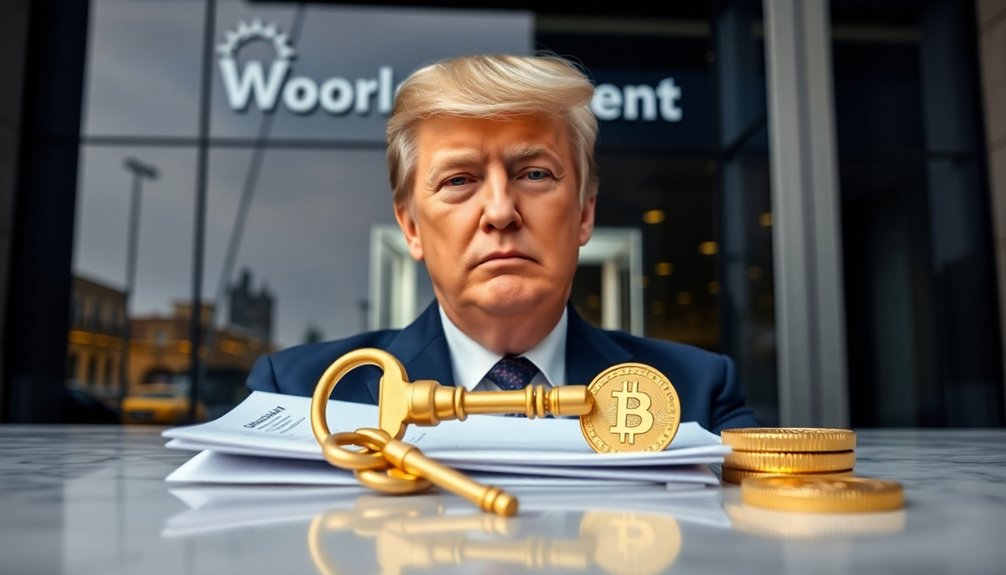
The Trump connection runs deep. All three of Trump’s sons are listed as co-founders of World Liberty Financial, with the former president himself named as “co-founder emeritus.” Talk about keeping it in the family. The Trump brand brings both potential benefits and complications to the charter application. Like many blockchain technology applications, this venture aims to disrupt traditional financial systems while still seeking regulatory approval.
If approved, WLTC would join a select group of crypto firms with national bank charters. The company plans to offer three core services: stablecoin issuance and redemption, on-ramp and off-ramp services between USD1 and dollars, and custody for digital assets. They’re planning no fees at launch for these services. Nice.
This application represents a bold step toward bringing cryptocurrency operations under the umbrella of federal banking regulation. USD1 currently operates across ten blockchain networks including Ethereum, Solana, and BNB Smart Chain, showcasing its technical versatility. The OCC’s decision will determine whether WLTC gains access to federal bank supervision and connectivity to the broader U.S. banking system.
For Trump’s venture, the stakes are high. Approval would legitimize their operation within the traditional financial system. Rejection would force them to seek alternative regulatory paths.
Either way, the application shows the Trump brand isn’t just dabbling in crypto—they’re aiming to become major players in the regulated digital asset space. Game on.