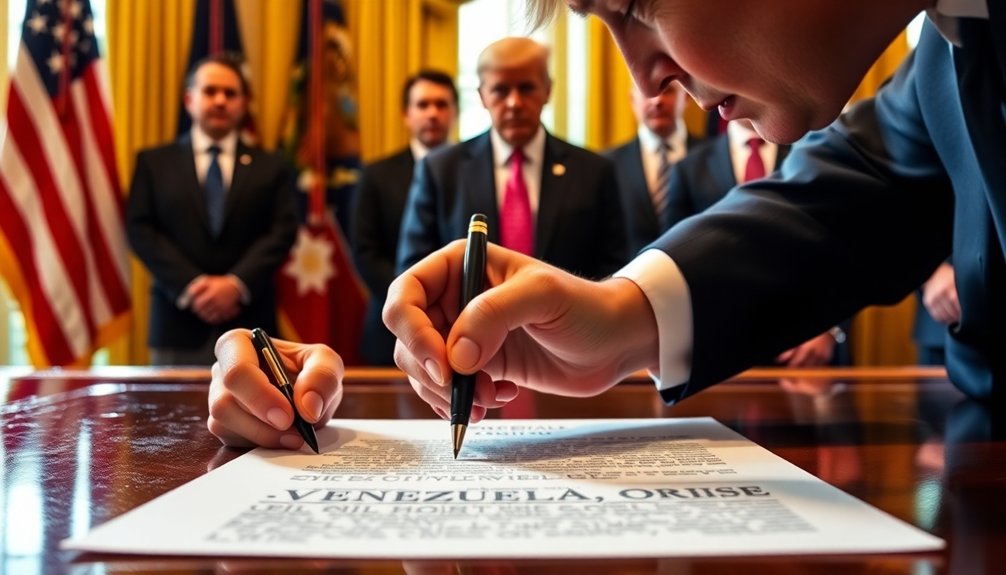
President Trump flexed his executive power yesterday, signing a sweeping order that shields billions in Venezuelan oil revenues from creditors and lawsuits. The move declares a national emergency regarding Venezuela’s sovereign oil funds held in U.S. accounts. Pretty serious stuff.
Trump shields billions in Venezuelan oil funds with emergency order, blocking creditors from crucial assets. Major power move.
The executive order effectively puts a force field around the money. No touching allowed. The administration calls these funds “Foreign Government Deposit Funds” and considers them sovereign Venezuelan property. They’re keeping tight control over the cash, claiming it’s for “governmental and diplomatic purposes.” Translation: We decide where this money goes, not you.
The timing isn’t random. The order follows a January 3rd joint military-law enforcement operation that nabbed former President Nicolás Maduro. Got him. The administration framed the action as vital for regional stability following Maduro’s capture.
Why all this fuss over some oil money? National security, that’s why. The White House insists protecting these funds gives the U.S. leverage for foreign policy objectives in Venezuela. They’re particularly worried about illegal immigration from the region and drug trafficking. Those narcotics have killed countless Americans. Not a small problem.
The order prohibits anyone from transferring, dealing with, or placing claims on these funds without Uncle Sam’s blessing. The administration warns that losing control of the money could empower “malign actors” like Iran and Hezbollah. Bad news.
This isn’t isolated policy. It builds on years of sanctions against Venezuela‘s oil sector and recent naval actions that seized at least five tankers carrying Venezuelan crude in the Caribbean. Blockade, fundamentally. Trump’s administration plans to manage the sales of 30 million to 50 million barrels of previously sanctioned oil. The estimated value of this oil is approximately 4 billion dollars, representing significant revenue potential.
The Secretary of Treasury gets the task of implementing this order, working alongside State, Justice, and Energy departments.
Meanwhile, diplomatic channels are reportedly reopening. The administration’s message is clear: America First in hemispheric security, and we’re keeping our hands on Venezuela’s oil money. Period.