
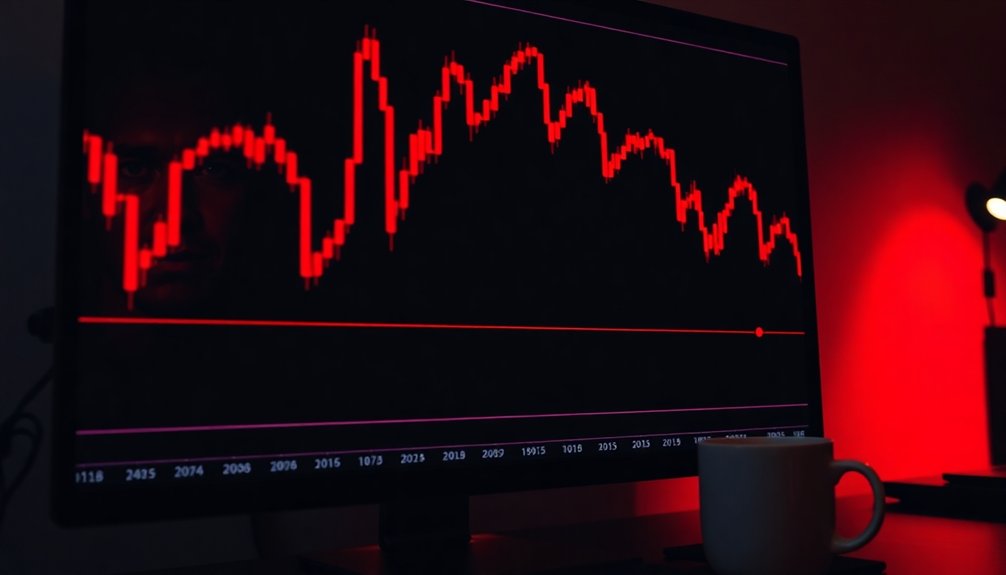
While crypto enthusiasts had been celebrating Bitcoin’s meteoric rise to $130,000 throughout summer 2025, autumn delivered a sobering reality check. By late November, Bitcoin had crashed 37% to $83,000, wiping out a staggering $1 trillion in market value. So much for digital gold. The party’s over—for now, at least.
The selloff wasn’t subtle. Bitcoin tumbled more than 30% from its October 6 high, bouncing around $90,000-$93,000, still a brutal 25-27% below the peak. Q4 returns? Down 20% and counting. The RSI plunged to 32, screaming “oversold,” while the Fear & Greed Index hit “extreme fear.”
Remember all that speculative froth? Gone. The MVRV Z-Score normalized to 1, and the Mining Costs-to-Price Ratio hit 1.15—usually the point where miners capitulate.
The Fed played villain again. Their hawkish policy shift created market whiplash just as investors were betting on rate cuts. At least their QT programme wrapped up December 1, with whispers of possible balance sheet expansion ahead. Powell’s comments expressing inflation concerns cast doubt on the likelihood of a December rate cut, further destabilizing market expectations.
Meanwhile, regulatory wheels ground to a halt with the U.S. Senate Banking Committee legislation stuck in limbo. Perfect storm, anyone?
Long-term hodlers finally blinked. Over 400,000 coins dumped in a month, some from wallets dormant for over a decade. Classic four-year cycle timing. Tax-loss harvesting didn’t help either. Everyone heading for the exits at once.
After years of diamond hands, even the most loyal Bitcoin believers sold in panic, triggering a cascade of market-wide capitulation.
Technically, Bitcoin’s been stuck in a consolidation range with $92,000-$94,000 as resistance and $80,000 as the must-hold support level. The growing correlation with traditional assets is another sign of the institutionalization of crypto markets, for better or worse. The Top10 Crypto CTI benchmark cratered 23% for the month. Brutal.
History offers some perspective, though. Q4 historically averages a 77% Bitcoin return (median 47%), with positive returns in 8 of 12 years.
On-chain metrics suggest most weak hands are gone. Plus, 25-30% drawdowns aren’t unusual in crypto bull markets. Corrections happen. Even the big ones. Despite the correction, Bitcoin’s market dominance remains strong at around 62.7%, highlighting its position as the premier cryptocurrency asset.
Is this just another bump in the road? Or something more sinister? Time will tell.