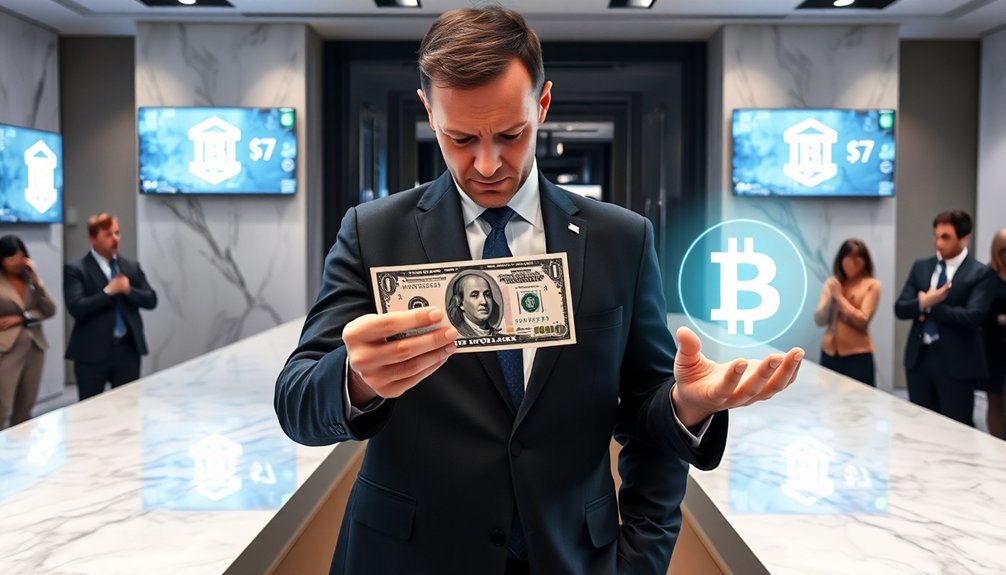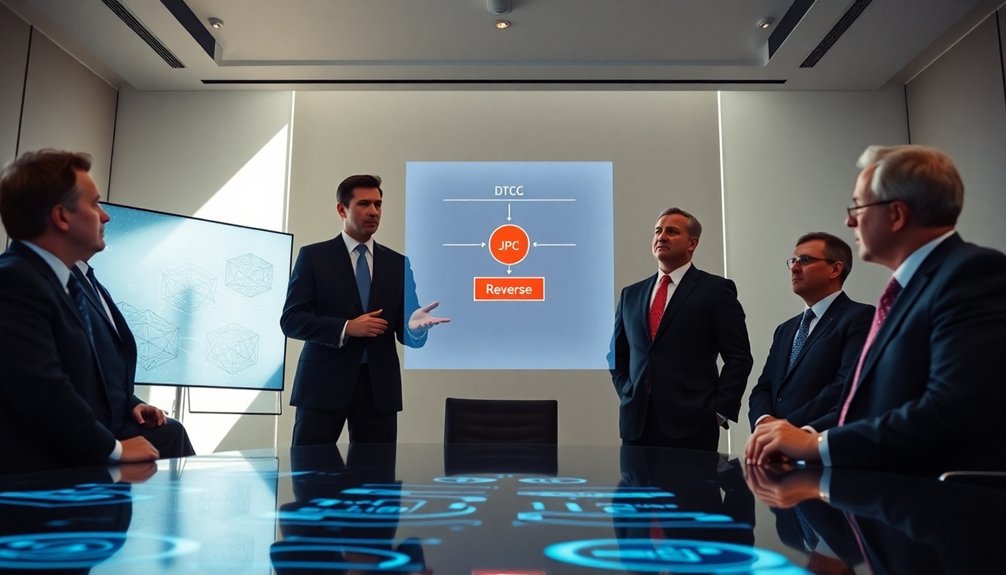

As DTCC and JPMorgan forge ahead with their groundbreaking partnership, the financial world inches closer to a reality where settlement times shrink from days to seconds. The collaboration focuses on bridging tokenized securities with on-chain cash management systems, potentially revolutionizing the traditional T+1/T+2 settlement cycles into near real-time T+0 transactions.
This isn’t some wild west crypto experiment. The SEC gave its blessing via a landmark no-action letter to DTCC’s DTC subsidiary in December 2025. Three years to prove it works. Quarterly reporting required. No 19b-4 filings needed. The regulators are watching, but they’re giving some room to breathe.
The rollout clock is ticking. DTCC plans to launch in the second half of 2026, with an MVP hitting controlled production environments earlier that year. Big banks get first dibs—makes sense, they’ve got the wallet infrastructure and audit trails already.
Time’s ticking on tokenization. DTCC’s 2026 rollout favors the banking giants—they’ve already got the digital plumbing in place.
What’s on the menu for tokenization? U.S. Treasuries first, through the Canton Network partnership. Russell 1000 stocks, ETFs, and major index funds will follow. The Canton Network was specifically selected for its privacy-focused structure that ensures only approved participants can access assets. Everything stays in DTCC’s custody system—these tokens are just digital representations of what’s already there. Old wine, new bottles.
JPMorgan isn’t sitting still either. They’ve rebranded their blockchain business to “Kinexys” because apparently adding an ‘x’ makes everything sound more future-forward. Their JPMD fund on Base chain shows they’re serious about public blockchain access. The pitch: swap tokenized collateral and cash in hours, not days. The MONY fund, initially seeded with 100 million dollars, aims to provide yield-bearing Treasury-backed instruments directly on Ethereum.
But here’s the kicker—there’s controversy brewing about an “undo button” for transactions. Wall Street wants a safety net. Crypto purists are rolling their eyes. Classic finance vs. blockchain philosophy showdown.
With the three-year authorization window extending through late 2028, both companies are betting big that tokenized settlement infrastructure will become the new normal. The race is on, and the finish line just got a lot closer.