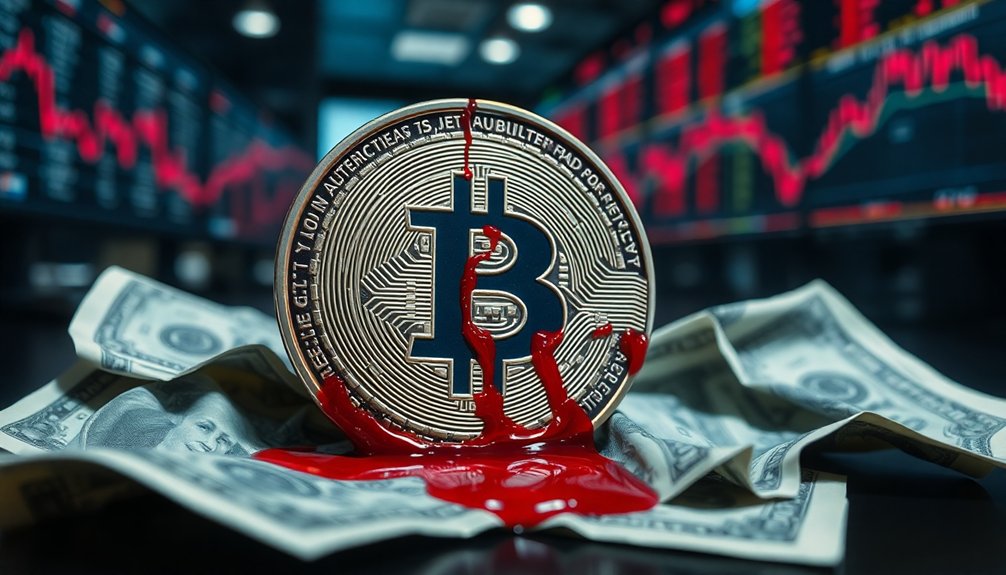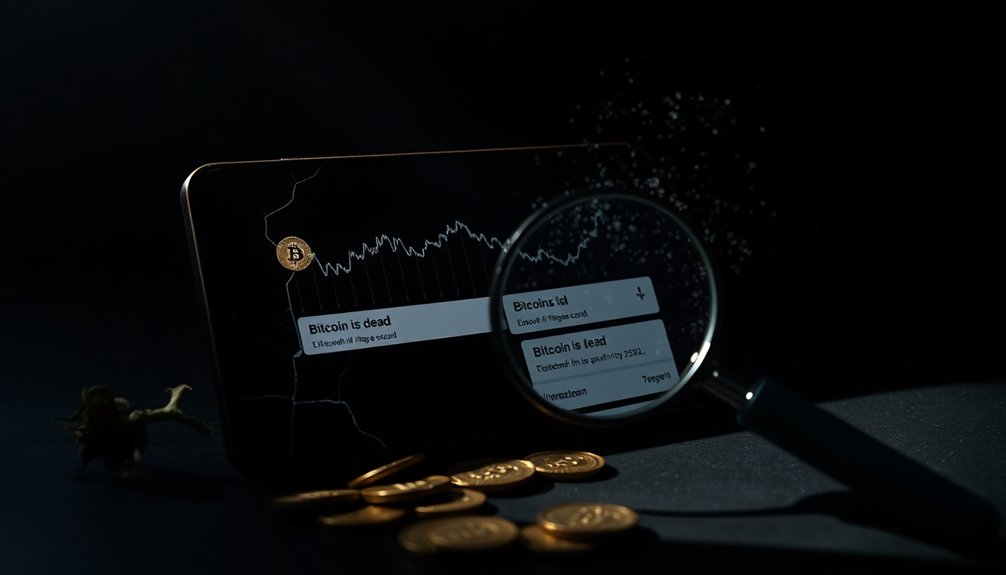

Panic has officially gripped the crypto world. As Bitcoin crashed from its October 2025 high of $126,080 to below $60,000 in February 2026, retail investors are freaking out. Google Trends data shows searches for “Bitcoin is dead” hitting an all-time high score of 100. Nothing says market capitulation like desperate midnight Googling.
This isn’t just your average dip. We’re talking about a 50% plunge from the October 6, 2025 peak. The kind of drop that makes even die-hard HODLers question their life choices. Trading volume exploded 23.88% to $41.93 billion as people either dumped their coins or scooped up what they saw as bargains. The record low of 5 on February 6 in the Fear & Greed Index further confirms this extreme market pessimism.
The Crypto Fear & Greed Index sits at a terrifying 11. Extreme fear. Not seen since the FTX collapse wiped billions from the market. Binance founder Zhao Changpeng even retweeted the search data on February 21, 2026. Nothing like a little doom scrolling to start your weekend. Similar search behavior occurred in past market bottoms when Bitcoin experienced significant corrections in December 2018, March 2020, and November 2022.
Interestingly, this panic seems concentrated in the US, where “Bitcoin zero” searches hit an all-time high. Maybe it’s those tariffs. Or Iran tensions. Or good old-fashioned American panic buying—and selling. Europeans and Asians? Much calmer. This behavior exemplifies the dangers of emotional investing that often leads beginners to make costly mistakes during market volatility.
We’ve seen this movie before. June 2022 gave us a similar search spike when Bitcoin tumbled from $32,000 to under $20,000. August saw another global peak at 100 for “Bitcoin going to zero” searches. The pattern is clear: retail investors freak out after the crash, not before it.
For market veterans, these panic searches are actually a bullish signal—what traders call the “wall of worry.” Historically, extreme fear readings have preceded average gains of 300% over the following year.