
Identifying a fake crypto exchange involves checking several key warning signs. Look for the absence of a physical address or unreliable contact methods. Verify regulatory compliance and check for customer support accessibility. Be wary of unrealistic profit promises and aggressive sales tactics. Finally, watch for unusual withdrawal requirements or hidden fees. Understanding these signs can help protect investments. There’s more to uncover about ensuring a safe trading experience.
As the popularity of cryptocurrencies continues to surge, individuals must remain vigilant in identifying fraudulent exchanges that threaten their investments. A fundamental aspect of this vigilance is the verification of a crypto exchange’s legitimacy. The absence of a physical address or the presence of a dubious offshore address often signals a risk. Utilizing street-view tools to confirm physical addresses can be a straightforward method of verifying legitimacy.
In addition, checking the domain registration date through ICANN lookups is essential; domains that are newly registered may indicate scams. Trustworthy exchanges typically possess older domain names, while newer ones might be fabricated to deceive unsuspecting investors. To further assess credibility, it is advisable to check for registration with entities like the CFTC and FinCEN. Additionally, missing regulatory information regarding a platform’s licensing status can significantly raise red flags about its trustworthiness.
Regulatory compliance plays a significant role in determining the credibility of a crypto exchange. Legitimate centralized exchanges generally have regulatory approval and are often listed in government databases. The absence of registration with regulatory bodies, such as the CFTC or the National Futures Association, should raise significant concerns.
Furthermore, many jurisdictions require crypto trading platforms to register as Money Service Businesses (MSBs); unregistered platforms may be engaged in fraudulent activities. Individuals should confirm the regulatory status of an exchange through official registries to avoid potential scams.
Customer support and communication channels are also indicative of an exchange’s reliability. A lack of accessible, real customer support diminishes a platform’s credibility. Exchanges using temporary phone numbers or relying solely on chatbots for customer service signal potential scams.
Additionally, legitimate exchanges refrain from initiating unsolicited contact through social media, while aggressive sales tactics on platforms like Discord or Telegram often indicate fraudulent intentions. The absence of human support raises trust concerns, further emphasizing the need for thorough verification.
False advertising is another common tactic employed by fraudulent exchanges. Many platforms display fake endorsements, using logos from reputable media without permission. Verification of these endorsements requires cross-checking with independent news sources.
In addition, unrealistic profit promises, such as guaranteed high daily returns, are significant warning signs. Any claims of endorsements should be verified against credible directories and regulated industry databases.
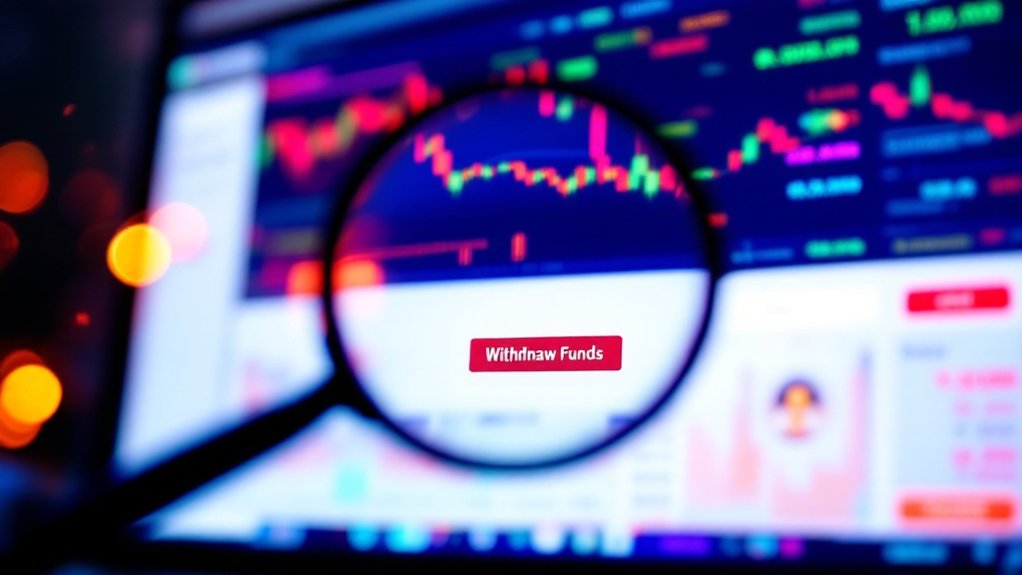
Finally, withdrawal and fee manipulations are classic indicators of scams. Platforms that demand upfront or repeated fees for verification, processing, or taxes to release funds are often fraudulent.
Increasing fee demands post-initial payments and restrictions on withdrawals without additional fees are common tactics used to exploit victims. Legitimate exchanges maintain transparent fee policies and facilitate withdrawals without unnecessary extortion, making it vital for individuals to remain cautious and informed.
Frequently Asked Questions
How Can I Verify the Legitimacy of a Crypto Exchange?
To verify the legitimacy of a crypto exchange, one should check for valid licenses from recognized regulatory authorities and confirm them on official websites.
It is essential to assess the exchange’s security measures, such as two-factor authentication and insurance for user assets.
Additionally, reviewing the exchange’s KYC and AML processes, understanding the team’s credibility, and analyzing community feedback can provide insights into its reputation and operational transparency.
What Regulatory Bodies Oversee Cryptocurrency Exchanges?
Various regulatory bodies oversee cryptocurrency exchanges globally.
In the European Union, the MiCA regulation mandates licensing and consumer protections.
Brazil’s Central Bank supervises under the Cryptoassets Act, while Singapore’s MAS enforces the Payment Services Act.
In the U.S., the SEC and CFTC regulate securities and commodities, respectively, with FinCEN focusing on AML and KYC compliance.
Each jurisdiction presents unique frameworks, creating a complex regulatory landscape aimed at enhancing market integrity and consumer safety.
Are There Any Reliable Third-Party Reviews for Exchanges?
Yes, there are reliable third-party reviews for cryptocurrency exchanges.
Platforms like CoinGecko and CoinMarketCap provide objective rankings based on quantitative metrics such as liquidity and trading volume.
Financial and investment media, including NerdWallet and Business Insider, offer expert-curated reviews that combine user experiences with analytical data.
Additionally, community feedback from forums and social media can reveal real-time user experiences, although it is essential to verify the authenticity of such reviews.
How Do I Report a Suspected Fake Crypto Exchange?
To report a suspected fake crypto exchange, individuals can contact local law enforcement to initiate investigations, file complaints with regulatory bodies like the SEC or FTC, and utilize online platforms such as the Crypto Scam Tracker.
It’s essential to document all interactions, transaction details, and evidence of fraudulent activity.
Additionally, reporting to legitimate exchanges and crypto watchdogs can help prevent further scams and protect other potential victims within the community.
What Steps Should I Take if I Fell for a Scam?
Upon realizing a scam has occurred, the individual should promptly contact their financial institutions to freeze assets and document transaction details.
Securing all related accounts with new passwords and multi-factor authentication is imperative.
Filing reports with law enforcement and regulatory bodies can initiate investigations.
Avoiding further communication with scammers is essential to prevent additional losses.
Finally, retaining all evidence is important for potential legal recourse and recovery efforts.