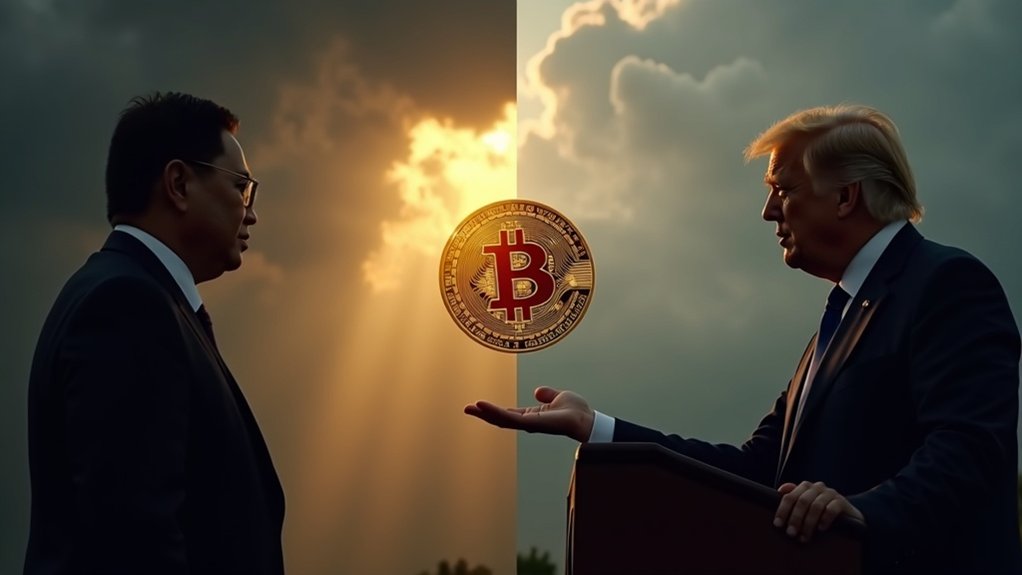

In a stunning move that sent shockwaves through the cryptocurrency world, former President Donald Trump has pardoned Changpeng Zhao, the founder and CEO of Binance. The unexpected decision came after months of legal battles surrounding allegations of money laundering at the world’s largest cryptocurrency exchange. Industry insiders are calling it a watershed moment. Yeah, that’s putting it mildly.
This pardon doesn’t just affect one man. It potentially rewrites the rulebook for cryptocurrency regulation in America. The SEC and CFTC have been breathing down the necks of crypto exchanges for years. Now what? Trump’s action might signal a dramatic shift in how these agencies approach enforcement. Or not. Politics and finance make strange bedfellows.
Investors reacted immediately. Bitcoin jumped 5% within hours of the announcement. Typical. Markets hate uncertainty, and this decision—however controversial—provides clarity for Binance’s future operations. The exchange processes billions in transactions daily, and its stability matters to the entire ecosystem.
Markets predictably celebrated the decision. Regulatory clarity, even through controversial means, beats uncertainty every time.
Competitor exchanges are scrambling to understand the implications. If Binance’s legal troubles disappear overnight, what does this mean for everyone else trying to navigate the regulatory minefield? Some are already pushing for similar treatment. Good luck with that.
The international fallout could be messy. Financial crimes enforcement relies on global cooperation. Many countries were watching the Binance case as a bellwether for how America would handle cryptocurrency compliance. Now they’re left wondering what’s next. Awkward diplomatic conversations are definitely happening right now.
For everyday crypto users, the immediate impact is minimal. Binance continues operating. Coins keep trading. But long-term, this could reshape the entire industry’s approach to regulation. More companies might challenge aggressive enforcement actions. Compliance costs might decrease. Or increase. Nobody really knows.
One thing’s certain: the line between traditional finance and cryptocurrency just got blurrier. Wall Street is watching. Washington is divided. And Changpeng Zhao? He’s probably sleeping better tonight than he has in months. This development comes as Bitcoin maintains its market dominance of approximately 62.7% over altcoins in the cryptocurrency space.