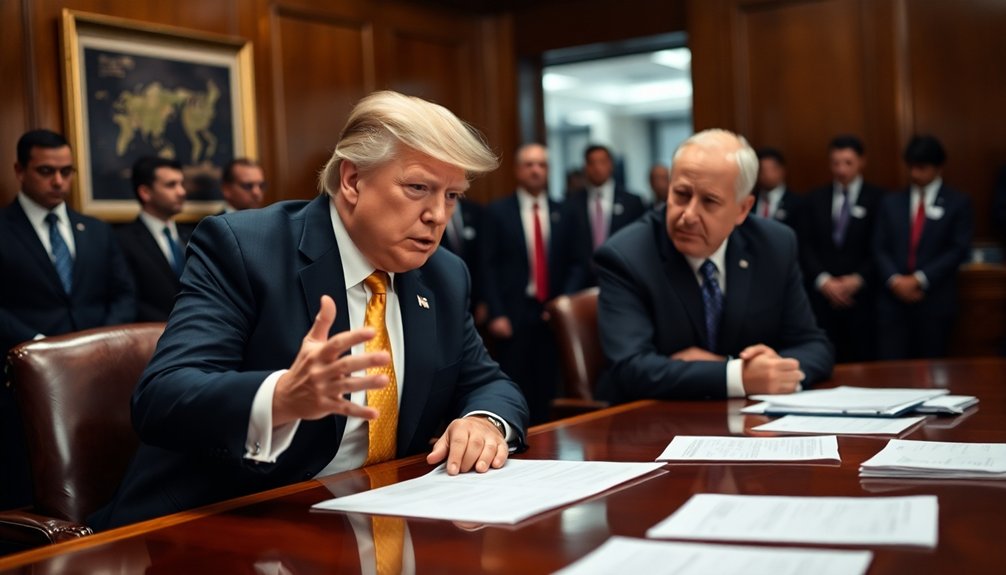

Trump wasted no time. Within his first week back in office, he signed an executive order titled Strengthening American Leadership in Digital Financial Technology. That’s a mouthful. But the message was simple: U.S. crypto policy was getting a complete overhaul, fast.
The order created the Presidential Working Group on Digital Asset Markets, tasked with building a real federal framework for digital assets, including stablecoins. Agencies were told to identify crypto-related regulations that needed to be scrapped or changed.
And in a pointed move, the order barred agencies from promoting central bank digital currencies. Reuters called it a fast-track effort to reshape U.S. crypto rules and protect banking access for crypto firms. That about sums it up.
The banking piece was a big deal. Industry players had long complained that banks were quietly pressured to cut off crypto firms. The White House acknowledged this directly and made protecting banking access for crypto companies an explicit policy goal.
By May 2026, a follow-up executive order broadened that review to cover fintech firms, including exchanges, custodians, stablecoin issuers, and on-chain payment processors. The Federal Reserve was also asked to study whether non-bank firms, including digital-asset businesses, could get direct access to Reserve Bank payment accounts. Bold ask.
On the regulatory side, the SEC and CFTC relaunched something called “Project Crypto” in 2026 as a joint initiative. The goal was to reduce the fragmented oversight that had confused markets for years.
Their joint guidance classified many crypto assets as commodities, collectibles, payment tokens, or digital tools. That classification cut down the number of tokens requiring SEC-style registration and disclosure. Convenient for the industry. Deliberate by design.
The stablecoin front moved quickly too. The GENIUS Act became law in July 2025, presented as a landmark step in positioning the U.S. as a global leader in digital assets. Payment modernization became a running theme across nearly every policy action taken.
Then in August 2026, the Senate advanced a sweeping crypto market structure bill. The legislation aimed to define once and for all when a digital token is a security versus a commodity, and which regulator is responsible. That kind of clarity had been missing for years. Embarrassingly long. The Digital Asset Market CLARITY Act, which cleared the Senate Banking Committee with a 15-9 bipartisan vote, represented a federal jurisdictional framework that would grant the CFTC primary oversight over spot digital commodity markets.
SEC chair Paul Atkins introduced the broader classification overhaul as a token taxonomy framework, marking a deliberate break from the aggressive enforcement posture that defined the previous administration’s approach to digital assets.
Taken together, it’s a regulatory transformation that the crypto industry had been lobbying for since Bitcoin was still a punchline. Experts consistently note that regulatory uncertainty has long exposed investors to heightened security threats, fraud risks, and asset losses that clearer frameworks are now designed to address. Whether it all holds together legally and politically is a different story entirely.