
While the race toward a digital dollar heats up, experts warn of significant risks lurking beneath the innovation. The digital transformation of America’s currency isn’t some far-off concept—it’s happening right now. Private stablecoins already process around $2 billion in daily transactions, proving these aren’t just theoretical instruments.
America’s digital money revolution isn’t coming—it’s already here, with billions flowing through systems that fundamentally redefine what currency means.
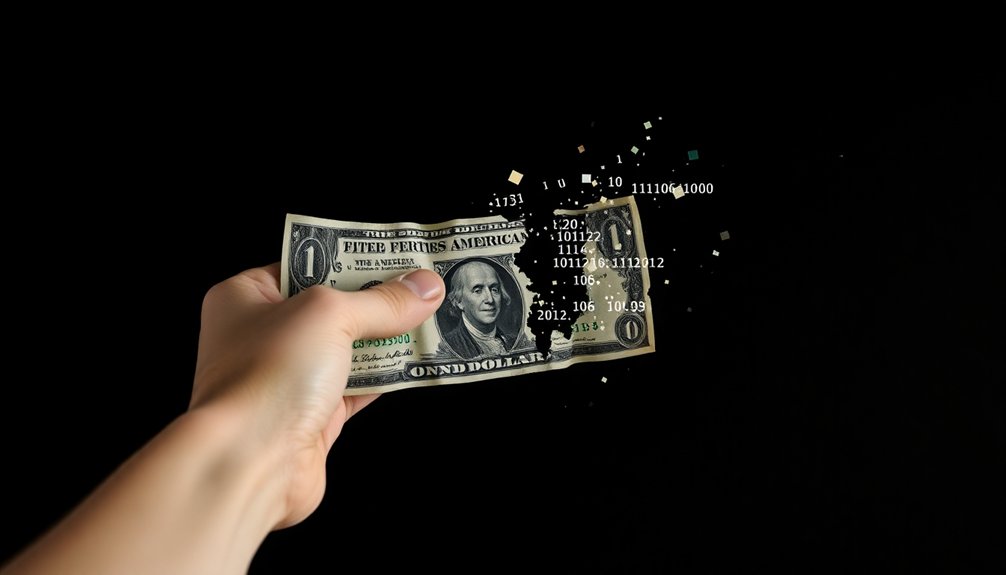
Here’s the uncomfortable truth: a digital dollar is fundamentally different from the paper bills in your wallet. It’s a tokenized representation using blockchain technology, programmable in ways physical money simply isn’t. Great for efficiency, sure. Terrifying for privacy? Absolutely.
The GENIUS Act has drawn a clear line—private stablecoins yes, government retail CBDCs no. American lawmakers seem convinced that private sector innovation beats centralized control. The legislation requires all stablecoins to have 100% reserve backing with highly liquid assets to protect consumers. They’re backing these digital tokens with Treasury securities, effectively turning stablecoins into major players in the financial system.
But when does a digital dollar stop being a dollar? When it’s suddenly programmable, traceable, and potentially restrictable. When it moves from a simple store of value to something that can be manipulated through code. Yeah, that’s not exactly the cash you’ve known your whole life.
Stablecoins promise 1:1 redemption with USD, backed by reserves primarily in cash and short-term Treasuries. Sounds secure. Except when it’s not. Financial crises don’t exactly follow rulebooks. The U.S. House’s passage of the Anti-CBDC Surveillance State Act represents a decisive move to prevent government-issued digital currencies from potentially monitoring citizens’ transactions.
Meanwhile, other countries are racing ahead with central bank digital currencies. The U.S. hesitates, worried about disrupting banking systems and credit markets. Fair concerns. But sitting still isn’t a strategy.
The stark reality? Your future money will exist primarily as digital tokens on distributed ledgers. It will be faster and more efficient. It might also be more vulnerable to surveillance, programming restrictions, and systemic risks we haven’t even imagined yet. In regions with unstable currencies, stablecoins already serve as a crucial bank alternative for preserving value.
The digital dollar is coming. It will still be called a dollar. But make no mistake—it won’t be the same thing at all.