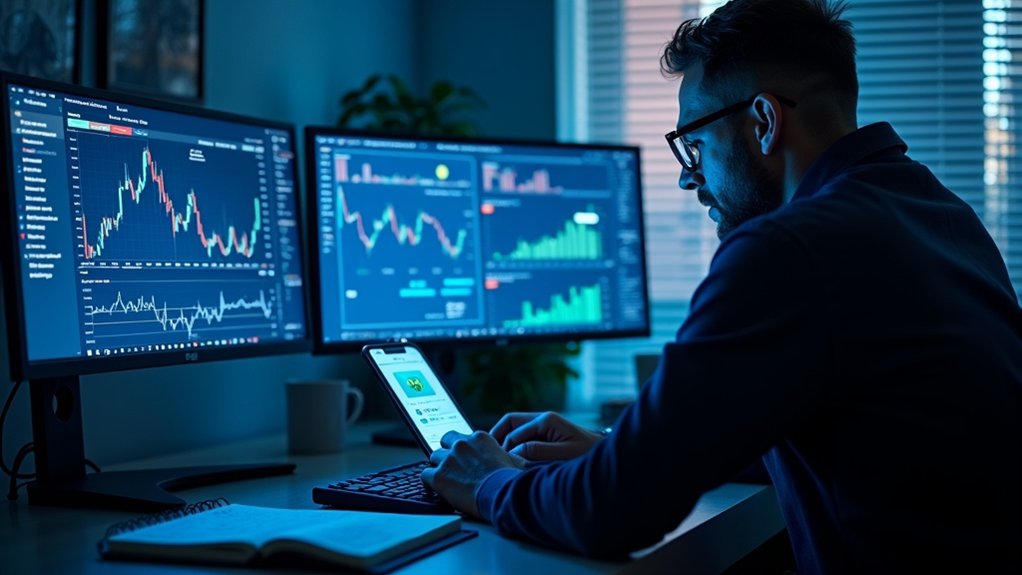

Drowning in data, crypto traders are turning to AI assistants like Claude for a lifeline. The crypto landscape is a mess of information—social media chatter, technical indicators, on-chain data, and endless news cycles. Humans can’t keep up. Period. Claude AI processes these fragmented streams in seconds, spotting patterns that would take traders hours to find. If they found them at all.
The digital firehose overwhelms human traders. Claude cuts through the noise, finding the signals they’d miss entirely.
It’s not about replacement. No trader is handing over their Ledger to an algorithm. They’re partnering with AI. The machines handle the grunt work—data synthesis and pattern recognition—while humans make the actual decisions. Because let’s face it, AI still can’t replicate that gut feeling when something’s off in the market. Human intuition matters. Claude’s ability to analyze complex tokenomics helps traders evaluate potential investments more thoroughly than traditional methods allow.
The forecasting is impressive though. Claude produces detailed price projections—like XRP hitting $3.25 by October 2025. These aren’t random guesses. They’re probability-weighted scenarios based on liquidity trends, technical setups, and catalysts like ETF approvals. Traders use these forecasts to plan entries, exits, and hedges. Smart money listens. With Bitcoin now trading above $118,000, AI tools are becoming essential for tracking market liquidity trends across multiple cryptocurrencies simultaneously.
Strategy development has evolved too. Traders configure AI with specific rules, backtest against historical data, then paper trade before going live. The feedback loop is constant. The strategies adapt. The execution removes human emotion—no more panic selling at the bottom or FOMO buying the top.
Perhaps most significant? The democratization effect. Cloud-based AI gives retail traders institutional-grade analysis without the Wall Street resources. No PhD required. Just an internet connection and basic trading knowledge. The playing field isn’t level yet—but it’s leveling.
Risk management is automated as well. Portfolio exposures, volatility thresholds, correlation metrics—all monitored in real-time. When something looks off, alerts fire. Compliance issues get flagged before they become problems. These systems help traders implement tiered stop-loss orders to protect their capital during extreme market volatility.
The revolution isn’t coming. It’s here. And traders who aren’t adapting are getting left behind.