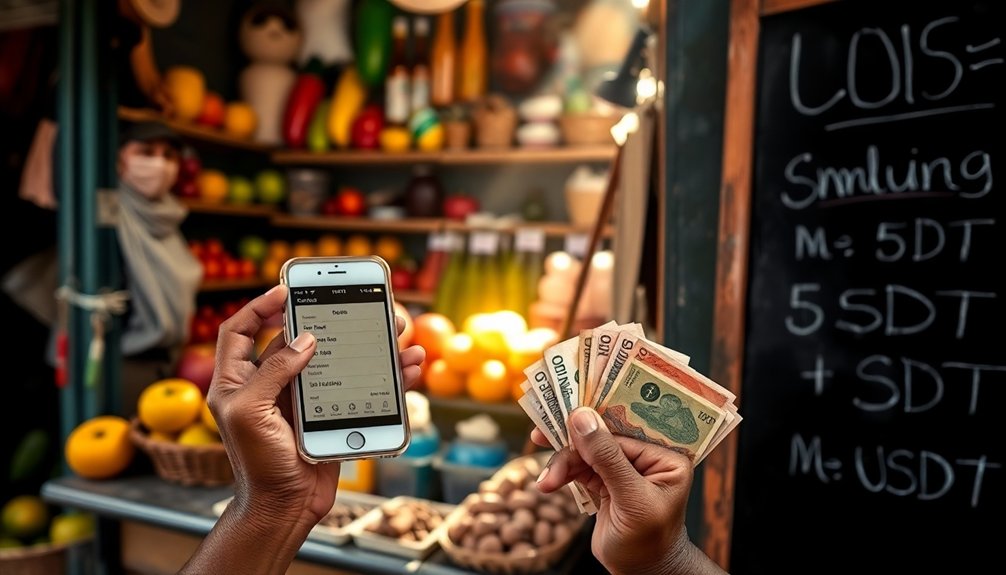

Nearly every financial institution is scrambling to catch up as stablecoins continue their meteoric rise in the payments world. It’s no surprise. Stablecoin transaction volume hit $46 trillion last year, more than doubling from the previous year. Even Twitter founder and Bitcoin maximalist Jack Dorsey is apparently rethinking his crypto purism.
Stablecoins are changing payments forever, forcing even the most dedicated Bitcoin purists to reconsider their stance.
The numbers don’t lie. Tether and USDC dominate the market, controlling 87% of the $300 billion stablecoin supply. With over 1% of all U.S. dollars now existing as tokenized stablecoins, their financial significance cannot be overstated. In September 2025 alone, stablecoin volume approached $1.25 trillion. That’s not chump change.
Traditional payment giants have noticed. Stripe, Mastercard, and Visa launched products letting users spend stablecoins through conventional payment rails. MetaMask, Kraken, and Crypto.com followed suit with their own card options. Even big banks like Citi and Bank of America are eyeing the space. They’re late to the party, but hey, at least they showed up.
The appeal? Cross-border payments that settle in seconds instead of days. And cheap. Really cheap. Sending USDC over Solana costs less than a penny compared to $30-60 for international bank wires. No wonder businesses are jumping onboard. The programmable money capabilities allow for automated transactions that traditional banking systems simply can’t match.
Stablecoins are crushing traditional payment methods. Their $9 trillion in volume over 12 months exceeded PayPal’s by five times and represented more than half of Visa’s volume. They’re approaching ACH network numbers, which serves the entire U.S. banking system. Pretty impressive for the new kid on the block.
Speed matters most to users (48%), followed by improved liquidity (33%). The APAC region has emerged as a cryptocurrency powerhouse with 69% year-over-year growth in on-chain crypto activity, further driving stablecoin adoption. Surprisingly, cost savings ranked lowest at 30%, suggesting people care more about performance than penny-pinching.
The infrastructure is diversifying, too. While Ethereum and Tron still handle 64% of transactions, newer networks are gaining ground. PayPal’s PYUSD grew from $785 million to nearly $5 billion in just a year.
For someone like Dorsey, who once declared Bitcoin as the internet’s only currency, embracing stablecoins must feel like a concession. But numbers speak louder than ideology. The stablecoin payment revolution isn’t waiting for anyone—not even Bitcoin diehards.