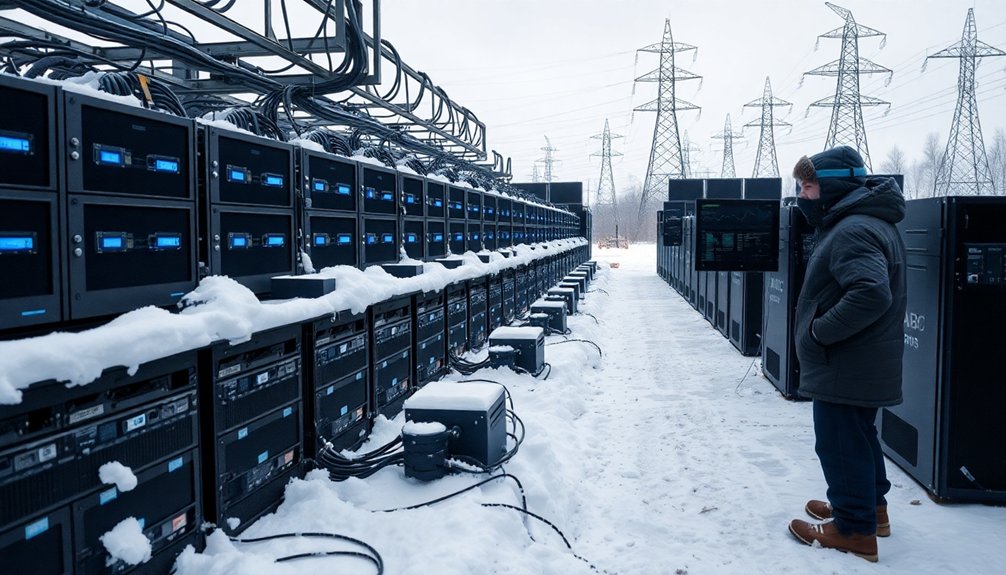

While most Texans were struggling to keep their homes warm during the recent winter storm, Bitcoin miners were laughing all the way to the bank. The bitter cold that crippled power grids turned out to be a gold mine for these digital prospectors. Funny how that works.
Bitcoin’s hashrate crashed to a seven-month low of 663 EH/s as the storm raged across the country. A staggering 40% drop in just two days. With 455 EH/s going offline between January 23-25, blocks that normally take 10 minutes stretched to 12. The network basically crawled.
Major mining operations saw their production fall off a cliff. CleanSpark’s daily output plummeted from 22 BTC to just 12. Riot Platforms crashed from 16 to a measly 3 BTC. Marathon Digital? They nosedived from 45 to 7 BTC daily. Ouch.
But here’s the kicker: they made more money by NOT mining. Profits soared up to 150% for miners who shut down operations. Instead of creating magical internet money, they sold power back to desperate grids. The utilities paid more than what mining would’ve earned them. Smart move.
The real crypto jackpot? Unplugging rigs and selling electricity when freezing Texans needed it most.
These arrangements aren’t accidents. Companies like Riot have demand-response deals with utilities that paid out handsomely. Remember when Riot earned $24.2 million in power credits during a previous shutdown? Iris Energy pocketed $2.3 million just for flipping their off switch. Nice work if you can get it.
The stock market noticed. TeraWulf and Iren saw significant gains in just five days. Some miners were making about 20 cents per kilowatt-hour selling power back to the grid, far exceeding the 8 cents equivalent they’d make mining Bitcoin. Not everyone was so lucky though. MARA Holdings, CleanSpark, and Riot shares recently took double-digit hits.
Times are tough in Bitcoin mining overall. The sustainability index hit a 14-month low of 21, with daily revenues bottoming out at $28 million before recovering slightly to $34 million after the storm. Miners with clear investment goals tend to better weather such market volatility by having predetermined exit strategies and risk thresholds in place.
Between Bitcoin’s price drop and mining difficulty, costs now exceed the value of mining versus just buying coins outright. This power management approach has evolved significantly since Winter Storm Uri in 2021, when miners were less integrated into grid reliability planning.
The winners? Those with power plants, locked-in prices, and diversified businesses. When life gives you a winter storm, sell electricity.