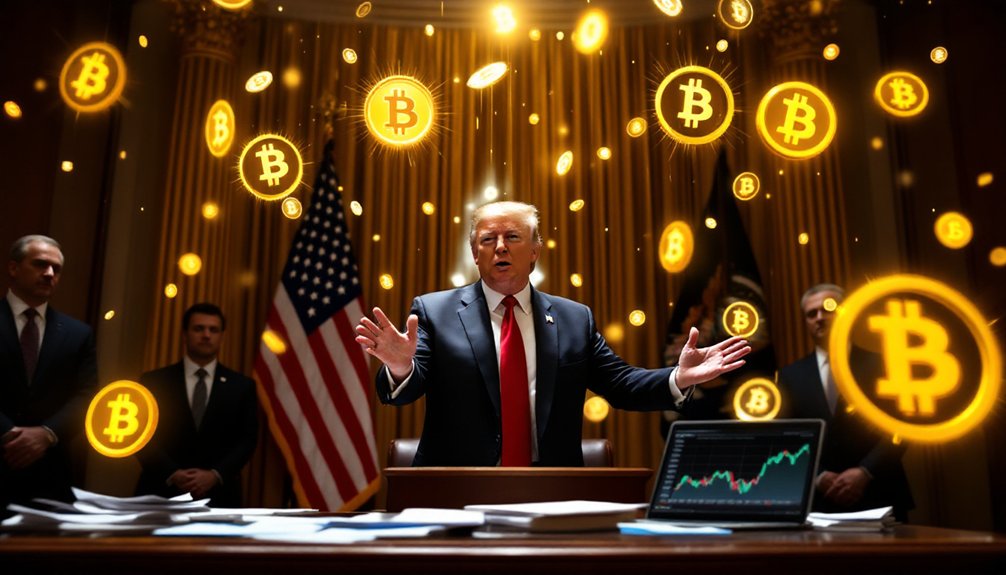

When Donald Trump launched World Liberty Financial during his 2024 presidential campaign, he didn’t exactly keep it modest. The firm, co-founded by Trump, his sons, and a handful of associates, planted itself squarely in decentralized finance and token issuance. And the branding? Pure Trump, front to back.
Reuters reported that the family and their affiliates were set to pocket 75% of some company revenues, plus a generous token allocation. The BBC put the family’s holdings in the billions. So yeah, crypto became a serious contributor to Trump family wealth, fast.
The ownership structure raised eyebrows immediately. Reuters reported that early governance provisions heavily favored insiders, concentrating value among the founders. The Trump family reportedly controlled just under 25% of nearly 100 billion WLFI tokens, per BBC. That’s a lot of tokens for one family.
Money poured in anyway. World Liberty Financial raised more than $500 million, according to Reuters. Justin Sun became one of the biggest investors. Some buyers admitted they bought in largely because of the Trump name. A fully built operating business? Not exactly a prerequisite, apparently.
Ethics watchdogs weren’t thrilled. Former regulators called for scrutiny. Democratic lawmakers called it a vehicle for corruption and self-dealing. The core complaint was simple and blunt: a sitting president’s family shouldn’t be running a crypto firm that rakes in hundreds of millions while he holds office. Experts have also noted that the firm’s concentrated ownership structure undermines portfolio diversification principles, which typically protect investors by spreading risk across a broader range of holdings.
A sitting president’s family shouldn’t be running a crypto firm raking in hundreds of millions while he holds office.
Reuters flagged complaints about centralized governance and a lack of transparency.
Then things got messier. Justin Sun sued the company. ABC News reported he accused the Trump family venture of breach of contract and fraud. Reuters reported that investors complained the company froze their funds while extracting large sums for itself. It played out publicly on social media before landing in court. Sun, the founder of TRON, had initially invested $45 million in World Liberty before the relationship collapsed entirely. Not a great look.
And then came the foreign money angle. CNN reported that an Emirati-linked investment firm acquired nearly 50% of the Trump family’s crypto company. That detail alone sent conflict-of-interest concerns into overdrive. A foreign-linked entity owning nearly half of a venture tied directly to a sitting U.S. president raised serious questions, and not just from political opponents.
World Liberty Financial has become a recurring example in debates about presidential ethics and crypto regulation. Sun, who previously settled SEC fraud charges for $10 million earlier this year, represents just one of several controversies now attached to the firm. Whether it ultimately wins a national banking charter or not, the firm has already accomplished something notable. It turned the Trump family’s crypto ambitions into a full-blown controversy, with lawsuits, foreign money, and political fallout included.