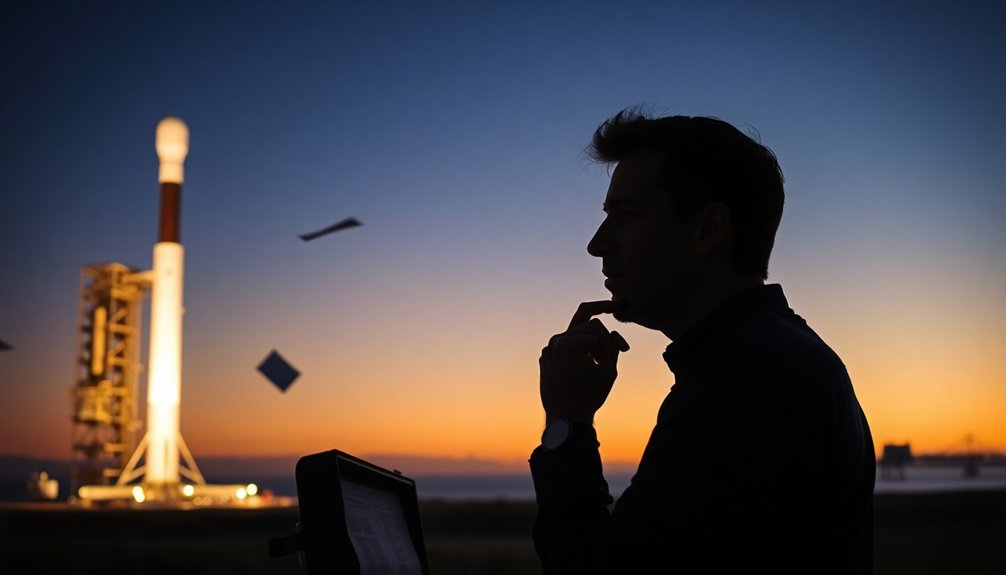

While Elon Musk expands his space empire, OpenAI CEO Sam Altman quietly plotted to challenge SpaceX’s dominance. The AI wunderkind wasn’t content with revolutionizing artificial intelligence—he wanted rockets too. Ambitious? You bet. Realistic? Well, that’s where things got complicated.
Altman set his sights on Stoke Space, a promising rocket startup with the potential to compete against Musk’s aerospace juggernaut. This wasn’t just window shopping. He pursued a controlling stake, which meant assembling billions in investment capital. Not exactly pocket change, even for tech royalty.
The deal’s structure blended acquisition and partnership models, combining equity financing with strategic alignments. Altman wasn’t just buying a company; he was positioning himself as a space industry player. Talk about a career pivot.
Negotiations quickly revealed the complexities of marrying AI leadership with rocket science. The parties struggled with valuation disagreements and control rights. Turns out, rocket companies aren’t priced like mobile apps. Shocking, I know.
Deal talks hit turbulence when funding structures couldn’t support Altman’s controlling stake ambitions. Stoke’s leadership and Altman’s team couldn’t bridge their strategic differences. The valuation gap proved too wide, and integration concerns loomed large. The deal collapsed under its own weight.
The failed venture still sent ripples through aerospace circles. Investors took notice—if the OpenAI chief saw potential in commercial space, maybe they should too. The episode highlighted how tech leaders increasingly view space as the next frontier, not just for exploration but profit. While Altman pursued rockets, his company secured a $200 million AI deal with Snowflake to enhance enterprise AI deployment capabilities.
SpaceX remained unchallenged after the deal’s collapse, but the attempt signaled growing interest in disrupting Musk’s space monopoly. Stoke Space continued independently developing launch systems, albeit without Altman’s billions.
The space race, it seems, isn’t just between nations anymore—it’s between tech titans with overflowing ambition and bank accounts. For now, Musk keeps his rocket crown. But in Silicon Valley, today’s failed deal is tomorrow’s successful disruption.