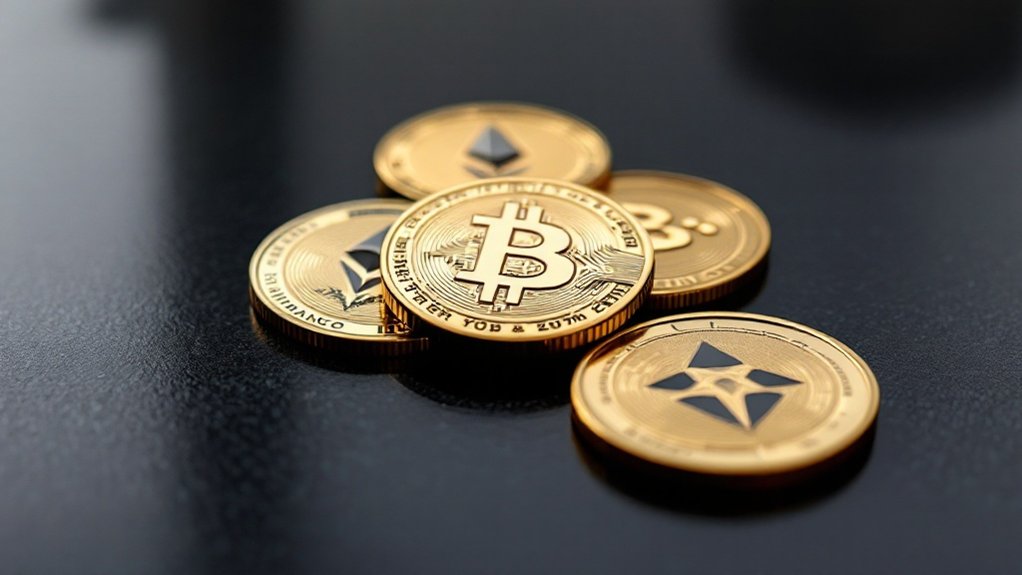

In 2024, beginners in cryptocurrency should consider Bitcoin (BTC), Ethereum (ETH), Litecoin (LTC), Binance Coin (BNB), and Cardano (ADA). Bitcoin remains the most recognized and stable option. Ethereum offers smart contract capabilities, while Litecoin is valued for its speed. Binance Coin serves as a versatile utility token, and Cardano emphasizes sustainability. Each cryptocurrency has its unique appeal, providing a strong starting point for new investors looking to navigate this evolving market. More insights are available for those interested.
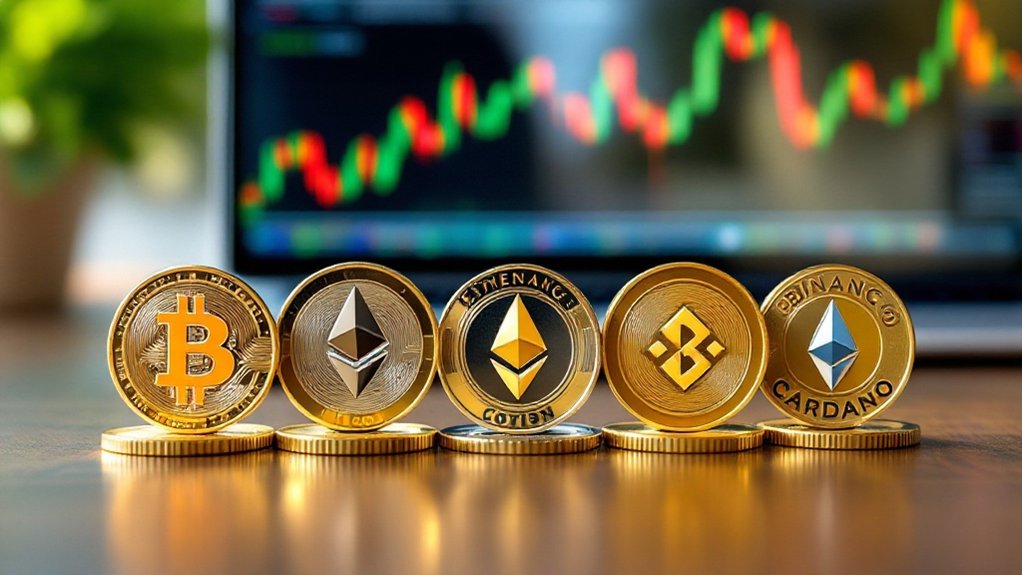
What makes cryptocurrencies an appealing option for newcomers to the financial environment? For many, the promise of decentralized finance and the potential for substantial returns make cryptocurrencies an enticing investment pathway. Among the myriad of options available, certain established cryptocurrencies stand out as particularly accessible for beginners looking to dip their toes into this burgeoning market.
Bitcoin (BTC), as the original and most widely recognized cryptocurrency, serves as a natural starting point for newcomers. Its longevity and broad acceptance lend it relative stability compared to its more volatile counterparts, making it a reliable option for those hesitant about investing in lesser-known assets.
Bitcoin (BTC) stands as a reliable entry point for newcomers, offering stability and recognition in the volatile cryptocurrency market.
Ethereum (ETH) also attracts beginners due to its role as a platform for smart contracts and decentralized applications. This utility opens doors to explore various blockchain functionalities, providing a richer experience beyond mere transactions.
Litecoin (LTC) offers an alternative with faster transaction speeds and lower fees, making it practical for smaller payments. Often referred to as the silver to Bitcoin’s gold, Litecoin’s established reputation can provide comfort to those just starting their cryptocurrency journey.
Binance Coin (BNB) initially emerged as a utility token for the Binance exchange, but its versatility in supporting trading, spending, and decentralized finance has expanded its appeal. This adaptability makes BNB especially attractive for users already engaged with the Binance platform.
For those interested in sustainability and scalability, Cardano (ADA) presents a research-driven approach to addressing key challenges such as energy consumption and transaction speed. These attributes resonate with environmentally conscious investors, offering a forward-thinking perspective on cryptocurrency. Additionally, this focus on sustainability aligns with the growing demand for decentralized finance (DeFi) solutions that are both efficient and eco-friendly.
In evaluating which cryptocurrencies to reflect upon, beginners should assess factors such as project leadership credibility, institutional investment, and the overall development status. Recognizing whether a purchase involves ownership or merely utility tokens is significant for informed decision-making. Additionally, understanding the underlying technology of cryptocurrency, including its blockchain technology, can provide deeper insights into how these digital assets function.
Transparency in transaction volume and community engagement also signals potential adoption, which is essential for new investors.
As beginners navigate the cryptocurrency landscape, platforms like Coinbase provide a user-friendly experience, ideal for those unfamiliar with digital asset trading. Additionally, security practices such as utilizing hardware wallets like Ledger Live can safeguard against hacks, ensuring that investments remain secure.
Understanding the basic concepts of cryptocurrency, including their independence from central authorities and the legal ambiguities surrounding their status, is fundamental for anyone venturing into this complex yet thrilling financial domain.
Frequently Asked Questions
What Is the Best Wallet for Storing Cryptocurrencies?
The best wallet for storing cryptocurrencies depends on user needs.
Hardware wallets, such as Trezor or Ledger, offer superior security for long-term storage, while software wallets like Exodus or Trust Wallet provide convenience for daily transactions.
For those seeking advanced features with added security, keyless wallets like Zengo utilize multi-party computation.
Ultimately, the ideal choice balances security, ease of use, and the specific cryptocurrencies the user intends to store.
How Do I Buy Cryptocurrencies With a Credit Card?
To buy cryptocurrencies with a credit card, one must first select a reputable exchange that supports such purchases.
After creating an account and verifying identity, the user links their credit card. They specify the amount to purchase and provide a wallet address.
It’s vital to review transaction fees and guarantee the credit card issuer does not classify the purchase as a cash advance.
Finally, confirming the transaction completes the process.
Are Cryptocurrencies Legal in All Countries?
Cryptocurrencies are not legal in all countries; approximately 45 out of 75 studied nations permit their use.
Some countries, like Saudi Arabia, impose outright bans, while others allow limited usage without formal regulation.
Legal recognition varies greatly, with only two countries, El Salvador and the Central African Republic, recognizing cryptocurrencies as legal tender.
Many nations continue to grapple with the complexities surrounding the legal status and regulatory frameworks for cryptocurrencies.
What Are Transaction Fees for Buying Cryptocurrencies?
Transaction fees for buying cryptocurrencies can vary considerably.
They typically include network or gas fees paid to blockchain validators, crypto exchange fees charged by trading platforms, and possible wallet fees for transferring tokens.
Network congestion and the specific blockchain can affect these fees, with some cryptocurrencies offering lower costs.
Additional charges may arise from withdrawal fees or payment method fees, leading to a wide range of expenses depending on the chosen transaction method.
How Can I Keep My Cryptocurrency Investment Safe?
To keep cryptocurrency investments safe, individuals should employ strong, complex passwords and enable Two-Factor Authentication (2FA) on all accounts.
Utilizing hardware wallets for long-term storage is essential, as it keeps private keys offline. Regularly backing up wallet seed phrases and monitoring accounts for suspicious activity further enhances security.
Additionally, using reliable VPNs, avoiding public Wi-Fi, and choosing reputable trading platforms with robust security measures can greatly reduce the risk of unauthorized access.







1 comment